Prev Post
What Types of Land Can NRIs Buy in India
The country is undergoing a lifestyle shift, with people opting for more space, more green space, more wellness, and more slow living. The farmhouse and nature-centric communities, a luxury earlier or a weekend escape plan, are now turning out to be mainstream options for living and for investment.
Pune, with a combination of natural assets and economic development that is quite unparalleled in other parts of the country, is turning out to be one of the largest hotspots for this trend.
1. Farmhouses Evolving Into Multi-Purpose Lifestyle Assets
Farmhouses around Pune are no longer just holiday homes. They now serve multiple long-term purposes, such as:
- Personal retreats
- Remote work residences
- Wellness & meditation homes
- Organic farming spaces
- Boutique homestays & rental properties
- Investment assets with high land appreciation
Locations like Mulshi, Velhe, Marunji, Lonavala, Talegaon, Panshet, and Paud Road belts are attracting serious attention due to abundant greenery, hills, lakes, and proximity to the city.
2. Wellness-First Living Is Becoming a Priority
Residents increasingly prefer:
- Cleaner Air
- Being near nature
- Space for outdoor living
- Lower population density
- Healthier, Quieter Environment
This is causing consumers to drift away from the city centre and opt for the relaxing views of the outskirts.
3. Connectivity Improvements Are Fueling Demand
Pune’s infrastructure development is playing a huge role in making nature-led living practical and accessible.
Key improvements shaping this trend:
- Proposed Pune Ring Road
- Faster connections to Mulshi, Pirangut, Paud, Hinjawadi Phase 3
- Widening of major highways
- Metro expansion toward key nodes
- Rise of work hubs across West Pune
4. Rise of NA Plots & Customisable Nature Homes
Many buyers now prefer NA plots or legally clear farmhouse plots where they can:
- Design personalised villas
- Create curated landscapes
- Build eco-friendly homes
Implement sustainable living systems (solar, rainwater harvesting, organic farms)
This freedom of customisation is one of the biggest drivers behind the surge in nature-led living.
5. Biophilic & Sustainable Architecture Is Becoming Mainstream
Developers in and around Pune are adopting modern eco-design concepts such as:
- Open-to-sky courtyards
- Natural ventilation
- Green roofs & vertical gardens
- Earthy building materials
- Water-sensitive landscaping
- Low-density planning
Homes are intentionally designed to blend with nature, not compete with it.
6. Lifestyle Shifts Among Young Buyers & Professionals
A new category of buyers is emerging:
- Entrepreneurs
- IT professionals
- Creative freelancers
- Wellness-focused families
- NRIs returning to India
- They are choosing farmhouse living for:
- Hybrid work models
- Peaceful lifestyle
- Ability to host gatherings
- Healthier environment for children
- Lower long-term stress
This is transforming farmhouses into primary homes, not just second homes.
7. Strong Investment & Appreciation Potential
Farmhouse and nature-led properties around Pune are showing strong returns due to:
- Limited availability of scenic land
- High demand from local and outside buyers
- Proximity to Pune’s expanding tech & business hubs
- Rapid infrastructure development
- High rental income potential through short-stay villas and retreats
These factors make them future-proof assets in both lifestyle and investment terms.
8. The Rise of Eco-Communities & Wellness Townships
The future will bring more organised nature-led communities offering:
- Private farmlands
- Clubhouses in natural settings
- Lakeside decks
- Meditation gardens
- Cycling & trekking paths
- Community farming zones
- Low-density villas with large open spaces
These projects offer the best of both worlds: urban comfort + nature’s tranquillity.
Conclusion
The farmhouse and nature-led lifestyle is not just a mere preference or mood swing – it is turning out to be a long-term lifestyle change in India. Pune is a pioneer in its suitability for climate, geography, workplace practices, and connectivity.
Buying Agricultural Land Legally in Karnataka (2025): A Simple Step-by-Step Guide
 A Simple Step-by-Step Guide.jpeg)
The Karnataka Land Reforms 2025 have made investments in agricultural lands, one of the major economic investments in Karnataka, far easier and more transparent. These newly developed rules simplify the process and provide clearer guidance for farmers, NRIs, and even non-farmers who wish to own farmland responsibly.
If you're considering investment in farmland this year, here is a step-by-step guide to assist you in making a legally compliant, confident purchase.
Step 1: Assess Your Eligibility
Review your income source, occupation, and background.
Under the 2025 reforms, non-farmers have to fulfil certain conditions.
NRIs should ensure that they have the necessary permissions under Indian law to invest in the agricultural sector.
The first step helps you avoid any legal complications later on and keeps your investment within the framework set up by the state's policies.
Step 2: Land Type and Records Verification
Next, check the type and classification of the land you are to purchase. Find out whether it is an agricultural, organic, or eco-farm land.
It is necessary to check crucial documents like:
RTC (Record of Rights, Tenancy, and Crops). Mutation records, ownership history and encumbrance certificate
This verification helps confirm that the property is legitimate, free from disputes, and suitable for the intended agricultural purpose.
Step 3: Legal Due Diligence and Registration
Utilise the services of a qualified legal expert so that the land is free from all sorts of legal and financial encumbrances. The expert can also help confirm that all documentation complies with the latest Karnataka Land Reforms 2025 requirements.
During registration, make sure:
- All approvals and transfers are made openly.
- The sale deed and all the relevant documents are duly registered.
- Proper due diligence protects your investment and avoids ownership disputes in the future.
Step 4: Consider Managed Farmland Options
The managed farmland projects should be a wise and compliant option for investors who seek hassle-free investments.
Step 5: Invest Confidently and Sustainably
In this way, you'll be able to invest in Karnataka agricultural land legally, safely, and responsibly. The reforms of 2025 have opened new avenues for those who want to contribute toward sustainable agriculture and savour financial and lifestyle benefits in the long run. Your aim may be anything from building a source of passive income or supporting organic farming to reconnecting with nature-the Karnataka landscape offers immense promise for responsible and transparent farmland investment.
Karnataka Land Reforms 2025: Making Farmland Ownership Easier for All
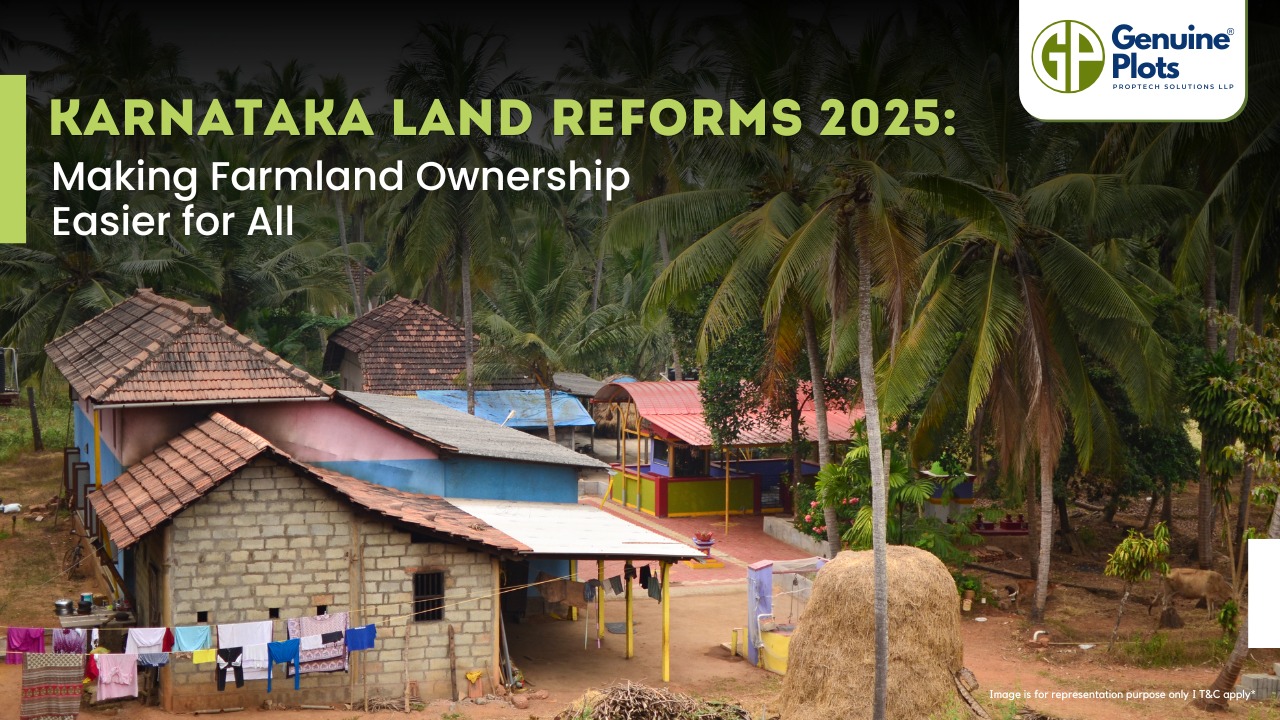
Owning agricultural land in Karnataka has always been a dream for many, be it for peaceful weekend escapes, sustainable farming, or long-term investment. But until now, buying farmland was not an easy thing to do, especially for non-farmers and NRIs.
Now, with the Karnataka Land Reforms 2025, things have turned out for good. These new rules make it simpler, fairer, and more transparent for people to understand and invest in farmland across the state. It will persuade people toward organic farming and the objectives of responsible ownership with eco-friendly land use, keeping the spirit of agriculture alive.
A Quick Look Back: How It Was Before 2025
To understand the impact of these new reforms, it helps to look at how things were before.
The Karnataka Land Reforms Act, 1961, initially aimed to protect the interests of farmers and to prevent land from being concentrated in a few hands. It had provisions to ensure that agricultural land remained in the hands of those who actually cultivated it.
Under the old system:
- Only registered farmers could purchase agricultural land.
- It prohibited the purchase of farmland by non-farmers, urban professionals, and investors.
- There were strict limits on how much land a person could own.
It wasn't until 2020 that the state started liberalising some of these restrictions by permitting some non-farmers to invest in structured and managed farmland models. This was perhaps a first step toward more liberal and modern agricultural investment.
Karnataka Land Reforms 2025: What's New?
The 2025 updates go further, with reforms that ease land ownership and enable sustainable, responsible farming.
Here’s what’s changed:
1. Clear Ownership Rules and Eligibility: The law now prescribes the maximum landholding limit, subject to which non-farmers, professionals, and NRIs could invest in farmland. This makes the process fair and regulates land hoarding.
2. Flexible Land Use Options: As such, partial conversion of land is now allowed for projects such as eco-tourism, farmhouses, and organic farming ventures. This means investors can explore multiple legal and sustainable uses for their land.
3. Support for sustainable and organic farming: Subsidies, technical support, and incentives are provided by the government for organic and ecologically friendly agriculture, thus promoting green growth and responsible farming.
4. Simplified Registration and Approval: The purchase of farmland has now become faster and more transparent. The new system ensures smoother registration, mutation, and approval, reducing red tape and delays.
The purchase of farmland has now become faster and more transparent. The new system ensures smoother registration, mutation, and approval, reducing red tape and delays.
These reforms unlock a new era in agricultural investment in Karnataka. The question no longer remains who can buy farmland, but how responsibly and sustainably one uses the land. Whether you are a farmer or an urban investor looking for a peaceful retreat amidst nature, the new Karnataka Land Reforms 2025 make owning farmland simpler, smarter, and more rewarding than ever.
Why Investing in Karnataka's Agricultural Land Could Be Your Smartest Move Yet

Purchasing agricultural land in Karnataka is not a simple process, as it involves a lot of financial and legal complexities. Before making a purchase, a buyer—whether a farmer, non-farmer, or NRI investor—must comprehend the local ecology, topography, and legal environment. However, the benefits could be abundant for those who follow all legal requirements and do their research.
Why Invest in Karnataka Agricultural Land?
Karnataka has emerged as one of the most promising states in India for investment in agriculture. The state comprises diverse agroclimatic zones, advanced irrigation facilities, and progressive government policies-ideal for the growth of small and large-scale agriculture.
Some of the key reasons include:
1. Favourable Agroclimatic Conditions
The varied climate of Karnataka ranges from being conducive for coffee, spices, and millets to fruits and vegetables; thus, it provides ample scope to investors for diversification in the agricultural portfolio.
2. Government Support and Policies
The Government of Karnataka has introduced several investor-friendly reforms and schemes related to agricultural development, making the process of land acquisition and its associated documentation easier than ever.
3. Revised Land Reforms Act
Recent changes to the Karnataka Land Reforms Act have paved the way for non-farmers and NRIs to invest in farmland legally. This flexibility has transformed the market, enabling more investors to venture into agricultural activities.
4. Strategic Location and Export Potential
The geographic advantage of Karnataka is its proximity to major ports and export hubs, giving easy access to both domestic and international markets and increasing profitability for agricultural produce.
5. Long-Term and Reliable Profits
Farmland investments offer consistent returns due to the growing demand for locally grown and organic produce.
The Bottom line
Karnataka offers a favourable environment for long-term investment growth, thanks to its diverse agricultural potential, expanding market demand, and supportive government reforms. Investors can make farmland ownership a lucrative and satisfying endeavour by making well-informed decisions and ensuring all legal and environmental considerations are taken into account.

As our world becomes more and more dominated by glass towers and concrete jungles, the bond between people and the earth beneath their feet is breaking. Our skyscrapers become taller every year, but they tend to do so at the expense of the very ecosystems that support life. By moving further away from natural cycles—light, wind, rain, earth—we unknowingly construct environments that suck energy and well-being. It's here that climate-responsive design comes into play, not as a design ethic, but as a responsibility to the planet and to ourselves.
Climate-responsive design, in essence, is about designing buildings with nature, not against it. It understands that architecture is not independent of the environment—architecture breathes, casts shadows, and responds to the climate. By observing the paths of the sun, prevailing winds, rain conditions, and available local materials, architects can design buildings that respond naturally to the climate. Such sensitivity lessens the need for artificial systems to heat, cool, and illuminate, thus reducing energy consumption and carbon emissions.
The strategy is not novel; it finds its roots in conventional buildings that long ago developed organically from the weather. Thick Rajasthani mud walls kept homes cool during the sweltering summer months, while south-facing Kerala roofs with sloped designs easily handled monsoon rains. These conventional treatments showed environmental intelligence long before the word "sustainability" was created. By integrating those lessons with contemporary technology, we can now design spaces that are resilient, effective, and restorative.
In and of itself, climate-responsive design is rewarding. Fresh air, green views, and natural daylight all improve mental and physical well-being. People can re-establish a connection with nature even in urban areas thanks to buildings that breathe and adapt, which enhances the sense of natural cycles.
Lowered energy use relieves strain on grids, neighbourhood water supplies remain filled, and urban heat islands can be reduced by vegetation and reflective surfaces.
At its core, climate-responsive design is more than an architectural fad—it's a path to a harmonious way of being. It pushes us to reevaluate how we use space, building more as partners with the earth and less as conquerors. Design's future lies in learning to live gracefully within nature's constraints rather than trying to control it.
The Future of Waterfront Plot Investment: Smart Strategies & Key Investment Tips
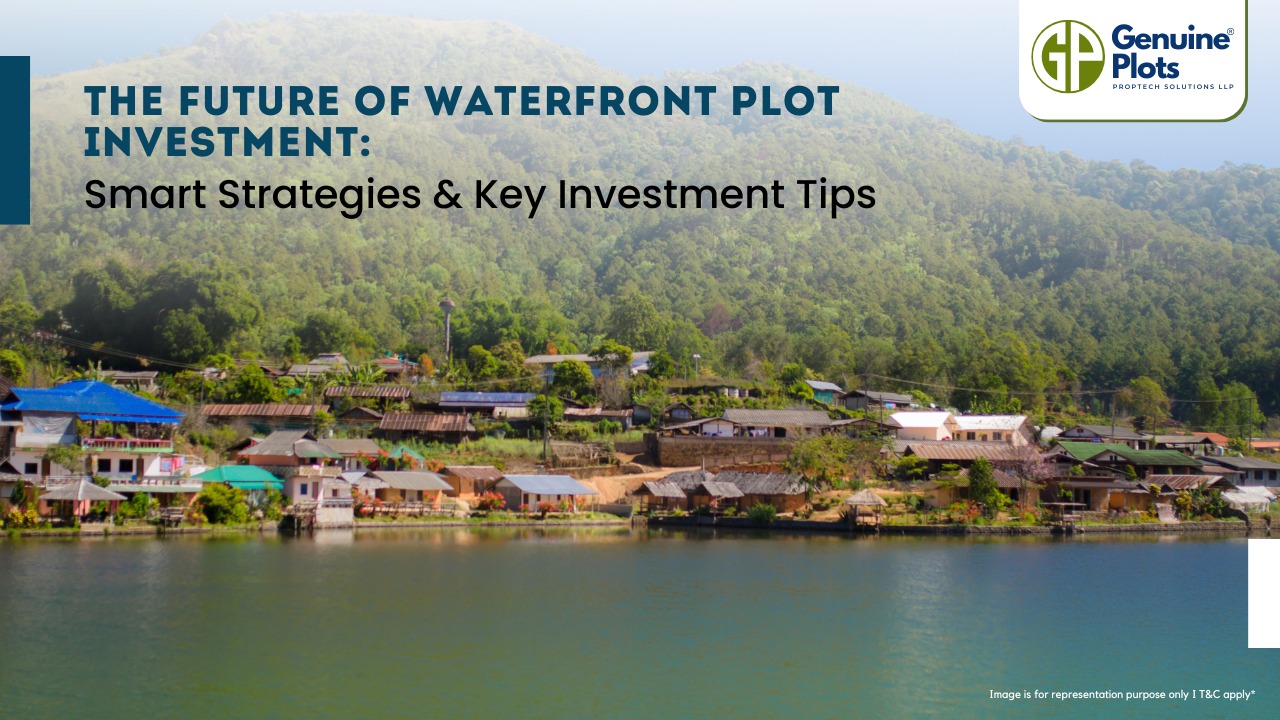
Waterfront plots have long been investors' fantasies, with their unparalleled views, lifestyle benefits, and status. But in today's changing property environment, not all waterfront homes are equal. To ensure long-term value and profitability, investors must now consider factors beyond the traditional view, including climate threats, shifting tourism trends, and new infrastructure priorities.
Why Waterfront Investments Still Shine
The future of waterfront plots will hinge on location quality, resilience to the climate, and robust infrastructure.
Early indications suggest that waterside assets in well-linked, prosperous areas outperform those in remote or underdeveloped zones. The best-performing investors are targeting tried-and-tested high-demand destinations, those with sound transport links, stable economies, and sustainable development strategies.
Investment Tip 1: Location Trumps the View
When assessing waterfront parcels, keep in mind that water itself does not promise success. The highest returns yield from parcels in urban or semi-urban centres where tourism, trade, and connectivity meet.
Parcels with good infrastructure, round-the-year tourism, and accessibility to airports or highways appreciate faster and provide higher rental yields. Remote waterfronts with little access, on the other hand, might lack liquidity and seasonal usage.
Investment Tip 2: Value Elevation & Flood Risk Evaluation
Plots of higher elevations with natural protection or engineered defences against flooding will retain worth and be more readily insured, an important benefit as regulations get stricter globally.
Investment Tip 3: Accessibility Boosts Returns
Plots that are conveniently connected to cities, transportation hubs, or well-known tourist attractions tend to perform better than those in more isolated locations. Accessibility is a significant factor for purchasers who are aiming for resale value or short-term rental income.
Investment Tip 4: Check Legal Access to the Water Body
Legal certainty can or will undo a waterfront transaction. There can be waterfront plots with view sites but lacking legal rights of access or use of the water's edge. It is essential to check if the land includes riparian or littoral rights, and if one is allowed to construct a jetty, dock, or private access route.
Hire a local real estate lawyer to examine deeds, easements, and shoreline ordinances. A waterfront without secure access may greatly restrict usage and resale value.
Investment Tip 5: Get Familiar with Community Rules & Building Restrictions
Each waterfront zone has its own special set of zoning regulations, environmental codes, and coastal development controls.
From height restrictions on buildings to setbacks and septic rules, these are details that can impact costs and the feasibility of design. Some coastal areas already have sea-level-rise zoning in effect, capping what can be constructed at the beach. Checking these guidelines upfront prevents costly redesigns and ensures permits don't languish down the line.
Investment Tip 6: Assess Amenities & Tourism Potential
Compliance with lifestyle amenities, restaurants, marinas, health care, and entertainment confers real value. Moreover, areas with increasing tourism and hospitality infrastructure tend to present valuable short-term rental opportunities through Airbnb-like websites.
However, local laws governing short-term rentals can differ significantly. To avoid violations, consider community policies, local taxes, and licensing requirements before figuring out vacation rental income.
The Upcoming Value Wave
Those who combine strategic foresight with scenic value will be the ones investing in waterfront real estate in the future. Data-driven site selection, sustainable building practices, and climate-adaptive design will distinguish successful assets from underperforming ones.
In the coming decade, investors who choose plots in resilient, amenity-rich, and economically active regions, while applying disciplined due diligence, will likely see stronger appreciation and more consistent rental yields than the broader market.
Recent Posts
Tags
Bhunaksha,
genuine plots,
Land For Sale,
Maharashtra Bhunaksha,
plots for sale,
Gunthewari,
Gunthewari Land,
Gunthewari Rules,
Extract Documents,
Plots and Lands,
Saat Baara,
Extract Saat,
Baara Utara,
Jamabandi,
property tax payments,
Gram Panchayat,
lower prices,
non-agricultural land,
Lower Investment Cost,
Gram Panchayat lands,
Fresh Land Settlements,
Growing demand,
affordable homes,
genuine p,
legal Land,
bungalow plots,
Konkan,
Maharashtra,
Purandar,
Pune,
Karnataka,
Bangalore,
Farm Land,
Kolkata,
Rajarhat,
Indore,
Chhatrapati Sambhajinagar,
Aurangabad,
Mundhwa,
Agricultural Land,
Farmhouse Plot,
Rules And Penalties,
Residential Plots,
NA PLots,
Residential NA Plots,
Commercial NA Plots,
Animal Husbandry Land,
Tathawade,
Vahivat Land Maps,
Vahivat,
Indian Land Records,
Ownership Rights,
Red zone,
PCMC,
Dehu Road,
Land Registration Rules,
Land Investing,
Infrastructure Growth,
Land Ownership,
Land Encroachment,
Panshet Dam,
Varasgaon Dam,
Verified Land,
Plot For Sale,
Land Investment,
Verified Plots,
Land Acquisiton,
Hydrological Survey,
Invest In Land,
Verified Land Plots,
Panshet,
Khadakwasla,
Land Rules,
Dakhil Kharij,
Land Registry,
Property Onwership,
Clean Title Check List,
Property Verification,
Digital Registry,
Farm Plots,
Agro Property,
Land Value Growth,
Urban Expansion,
Senapati Bapat Road,
Registered Land,
Agricultral Plot,
Purandar Airport,
Safe Investment,
Secure Property,
Plot Buyers,
Approved Plots,
Land ROI,
NA Approved Plots,
NA Land,
Welspun One,
Logistic Park,
Talegaon,
PMC Bharat Mandapam,
Urban Development,
Lohgaon,
Close To Nature,
Gated Community Plots,
Buy Land VS Gold Investment,
NRI Investment,
Future Ready Living,
Trusted Plots,
Plot Investment,
Authentic Land,
Safe Land Buying,
Mumbai,
Premium Plots,
MMR Land Investment,
MMR Infrastructure,
Metro Connectivity,
Plots in Mahabaleshwar hill station investment,
Mahabaleshwar land prices and future growth,
Scenic residential plots in Mahabaleshwar,
Mumbai 3.0,
Mumbai 3.0 vs Mumbai 2.0,
Mumbai property investment,
Real estate investment in Mumbai,
Upcoming residential projects in Mumbai,
CIDCO plot auctions,
CIDCO auction Navi Mumbai,
Upcoming CIDCO plot auctions 2026,
CIDCO land auction dates,
Navi Mumbai plot auctions,
CIDCO plots in Navi Mumbai,
CIDCO plots in Kharghar,
CIDCO plots in Ulwe,
NMIA investment opportunities,
Mumbai 3.0 plotted development,
Mumbai 3.0 real estate,
Plots in Mumbai 3.0,
Land investment in Maharashtra,
Residential plots near Mumbai,
Land appreciation in Mumbai 3.0,
Residential land for sale in Mumbai 3.0,
Altamura NA Plots,
Altamura Nadar City,
NA Plots in Nadar City,
Nadar City Plots,
Plots in Nadar City,
YEIDA plots,
YEIDA plots near Noida Airport,
Noida Airport plots,
Jewar Airport investment,
Yamuna Expressway plots,
YEIDA plot scheme 2026,
Noida Airport real estate,
Zepto,
Zepto effect,
D2C brands India,
Urban consumer trends,
Marketplace evolution,
Urban infrastructure growth,
YEIDA Residential Plot Scheme,
Yamuna Expressway Plot Scheme,
YEIDA Residential Plots,
Yamuna Expressway Authority,
Noida Investment,
Residential Plots in Lucknow,
LDA Plots in Lucknow,
Lucknow Real Estate,
LDA Approved Plots,
Plots for Sale in Lucknow,
Lucknow Property Investment,
Land Investment in Lucknow,
Residential Land in Lucknow,
Buy Plot in Lucknow,
Lucknow Development Authority,
Maharashtra Fragmentation Law 2025,
Fragmentation Act Maharashtra,
Maharashtra land law update 2025,
Maharashtra land reforms 2025,
Land subdivision rules Maharashtra,
Maharashtra agriculture land purchase rules,
Agricultural land purchase restrictions Maharashtra,
Can non-farmers buy agricultural land in Maharashtra,
NA conversion process Maharashtra,
Collector permission for land purchase,
farmland prices in Nagpur,
agricultural land price in Nagpur per acre,
farmland cost in Nagpur Maharashtra,
Nagpur agricultural land investment,
per acre agricultural land rate in Nagpur,
Tukdebandi Law Maharashtra,
Maharashtra Fragmentation Act update,
Land subdivision law Maharashtra,
Agricultural land division Maharashtra,
Maharashtra land reform ordinance,
Plot registration Maharashtra,
Farmland prices Nagpur,
Nagpur agricultural land rates,
Farmland per acre Maharashtra,
Agricultural land price Nagpur,
Farm land cost Nagpur,
Nagpur real estate trends,
Land investment Nagpur,
Avani Farms,
Avani Farms Pune,
Farmland near Pune,
Farm plots for sale,
Agricultural land investment,
Gated farmland near Pune,
NRI agricultural land rules India,
Can NRI buy agricultural land in India,
FEMA rules for NRI property purchase,
RBI guidelines for NRI land investment,
NRI farmland investment India,
Agricultural land purchase by NRI,
Maharashtra Fragmentation Act,
Minimum plot size in Maharashtra,
Guntha rules Maharashtra,
Agricultural land division rules,
Minimum land area for sale in Maharashtra,
Legal plot size in guntha,
Guntha conversion rules,
NRI land purchase in India,
Can NRIs buy agricultural land in India,
NRI property investment India,
NRI buying residential land,
NRI real estate guidelines India,
Investment tips for NRIs in India,
Mutation Entry Process,
Land Mutation in India,
Property Mutation Process,
Land Ownership Transfer,
1 guntha na plot prices in pune 2026,
1 guntha plot price in pune,
na plots in pune,
residential na plots pune,
guntha plot rate in pune,
na plot investment in pune,
plots near purandar airport,
1 Acre Land Price in Pune,
Pune Land Rates 2025,
Pune Land Price 2026,
Pune Acre Land Cost,
Land Value Pune,
Agricultural Land Price Pune,
gated community plots in Hinjewadi,
Hinjewadi plots for sale,
residential plots in Hinjewadi Pune,
premium plots in Hinjewadi,
plots near Rajiv Gandhi Infotech Park,
land for sale in Hinjewadi Pune,
Pune property investment,
plots for sale in Pune below 5 lakhs,
Pune rural land investment,
gated plotting projects Pune,
MIDC growth corridor plots,
Residential plots for sale in Hinjewadi,
Plots in Hinjewadi Pune,
Land for sale in Hinjewadi,
Residential NA plots Hinjewadi,
Hinjewadi real estate trends 2026,
Nashik land investment,
Trimbakeshwar land for sale,
Simhastha Kumbh 2026,
Simhastha Kumbh 2027 real estate impact,
Trimbakeshwar property investment,
Land appreciation in Nashik,
plots for sale in pune,
types of plots in pune,
residential plots in pune,
agricultural land in pune,
villa plots in pune,
NRI agricultural land purchase India,
NRI property investment in India,
Agricultural land rules for NRIs,
NRI real estate investment India,
NA plot meaning,
what is NA land,
NA land in Maharashtra,
land investment guide,
NRI agricultural land in Telangana,
Telangana land laws for NRI,
Telangana real estate laws,
NRI investment guide Telangana,
Legal compliance for NRI property,
NRI farmhouse purchase India,
RBI guidelines for NRI property,
NRI land buying rules,
Godham Eco Village,
Godham Eco Village for NRIs,
NRI land investment in India,
Investment plots for NRIs,
Secure land investment India,
NRI property buying guide,
plots in Pune,
NRI buying property in India,
NRI guide to buying land in Pune,
NRI land investment in Pune,
NRI property documents checklist,
Maharashtra land reform 2025,
Maharashtra land laws update,
Agricultural land rules in Maharashtra,
Buying agricultural land in Maharashtra,
Non-agricultural land conversion Maharashtra,
Maharashtra agricultural land rules 2024,
agricultural land purchase in Maharashtra,
non agriculturist land purchase rules,
who can buy agricultural land in Maharashtra,
Maharashtra land laws for non farmers,
Guntha based land rules,
Minimum guntha rule Maharashtra,
Maharashtra land laws,
Maharashtra agricultural land laws,
farmland investment Maharashtra,
buying farmland legally in Maharashtra,
NA conversion rules Maharashtra,
agricultural land eligibility criteria,
Property Mutation in India,
Land Record Update,
Revenue Records,
Property Ownership Transfer,
Mutation of Property,
Farmhouse Plots Near Pune,
NRI Investment in Pune,
Pune Real Estate,
Plots for Sale Near Pune,
Luxury Farmhouse Plots,
Pune plot scams,
Plot buying checklist,
Legal verification for plots,
NA plot verification,
Plot buying tips Pune,
Godrej Properties,
Evora Estate Panipat,
Luxury plots in Panipat,
Premium land investment,
Residential plots in Panipat,
Lodha Developers,
Lodha Developers Q3 acquisition,
Lodha land parcels Q3,
Indian real estate news,
New residential projects India,
Real estate investment news,
Premium housing projects,
Srijan Group,
Kolkata Tech Park,
Commercial Real Estate,
Real Estate Investment,
Real Estate Deal News,
NRI investment in India,
NRI land investment,
Plots for sale in India,
NRI property investment,
Can NRI buy residential plot in India,
NRI land purchase rules,
Residential plots for NRIs,
NRI real estate investment,
NRIs buying property in India,
Can NRIs buy plots in India 2026,
RBI rules for NRI property purchase,
NRI land investment rules,
MMR 3.0,
MMR real estate 2026,
Mumbai real estate market,
Navi Mumbai investment,
Thane property market,
Mumbai property trends 2026,
Land investment in MMR,
Mumbai smart city project,
Korea Mumbai partnership,
MMRDA infrastructure projects,
Korean investment in India,
MMR GDP growth,
MMR economic roadmap 2030,
Mumbai real estate,
Public private partnership projects Mumbai,
Investment opportunities in MMR,
Mumbai Metropolitan Region,
Mumbai urban development,
MMR 2047 vision,
Mumbai infrastructure projects,
Navi Mumbai development,
Goa property investment,
Invest in Goa 2026,
Goa real estate market 2026,
Best places to invest in Goa,
North Goa property,
Property appreciation in Goa,
Goa plots for sale,
Commercial property in Goa,
Buy property in Goa,
YEIDA plots 2026,
Residential plots in YEIDA,
YEIDA new scheme update,
Plots near Noida International Airport,
Yamuna Expressway Authority plots,
YEIDA housing scheme details,
Lucknow land investment,
Property in Lucknow,
Buy plots in Lucknow,
Nashik plots for sale,
Kumbh Mela 2026 Nashik,
Land investment in Nashik,
Nashik property market 2026,
Plots near Kumbh Mela Nashik,
Residential plots in Nashik,
Upcoming projects in Nashik,
Property appreciation in Nashik,
Maharashtra land investment,
Nashik Kumbh Mela 2026,
Kumbh Mela investment opportunities,
Infrastructure development in Nashik,
Plots near Nashik Kumbh Mela,
High ROI land investment,
MIHAN,
MIHAN Nagpur,
Nagpur Real Estate,
Agricultural Land Nagpur,
Nagpur Property,
Plots Near In MIHAN,
Pune residential plots,
best areas to buy plots in Pune,
Pune land investment,
investment plots in Pune,
buy land in Pune,
real estate investment in Pune,
Godrej Plots Doddaballapur,
Doddaballapur plots for sale,
Plots in North Bangalore,
Godrej Properties plots,
Residential plots in Doddaballapur,
Investment plots near Bangalore,
Gated community plots Bangalore,
Premium plots in Doddaballapur,
plots in Mahabaleshwar,
Mahabaleshwar villa plots,
farmhouse plots in Mahabaleshwar,
land for sale in Mahabaleshwar,
bungalow plots in Mahabaleshwar,
hill station property investment,
agricultural land in Mahabaleshwar,
premium land in Mahabaleshwar,
Plots in Pune under 3 lakhs for sale,
Budget residential plots near Pune,
Low cost plots near Pune highway connectivity,
plots in Pune under 3 lakhs,
farmland plots near Pune city,
Investment plots near Pune under budget,
Residential land near Pune,
Godrej plots in Pune,
Premium plotted development by Godrej in Pune,
Residential land for sale by Godrej,
Premium plot by Godrej,
Plots for sale in Hadapsar Pune,
Residential plots in Hadapsar,
Investment plots in Hadapsar,
Gated community plots in Hadapsar,
Ready to build plots in Hadapsar,
1 Guntha plot in Pune,
1 Guntha plot in Pune for sale,
1 Guntha plots near Pune city,
Residential 1 Guntha land in Pune,
Clear title 1 Guntha plot in Pune,
1 guntha plot price in village,
village plot rate per guntha,
affordable 1 guntha land in rural area,
residential plot in village Pune,
farmland plot price per guntha,
Residential 1 Guntha plot near Pune city,
Investment plots in Pune 1 Guntha,
Clear title 1 Guntha land in Pune,
Agricultural 1 Guntha plot near Pune,
1 Guntha plot in Pune Katraj for sale,
Residential plot in Katraj Pune 1 Guntha,
Katraj Pune land for home construction,
1 Guntha NA plot in Katraj Pune,
Pune Katraj plot near highway connectivity,
Gated plot project in Katraj Pune,
NA plots in Pune under 10 lakhs,
Affordable NA plots near Pune city,
NA residential plots in Pune,
NA approved plots in Pune under 10 lakhs,
Investment plots in Pune under 10 lakhs,
Residential NA plots near Pune highway,
Best plots in Pune below 10 lakhs,
Premium villa plots in Pune,
Residential villa plots in Pune near city outskirts,
Luxury villa plots in Pune,
Gated villa plot project in Pune,
Villa plot site visit in Pune,
NA plots in Pimpri Chinchwad for sale,
Residential NA plots in PCMC area,
NA approved plots in Pimpri Chinchwad,
NA land with clear title in PCMC,
NA plots near Pune Mumbai Highway PCMC,
Godrej Villa Plots Doddaballapur,
Godrej plotted development Bangalore,
villa plots in North Bangalore,
premium villa plots Bangalore,
Godrej Properties plots Bangalore,
Brigade Plots Malur,
Brigade Malur plots,
plots in Malur East Bangalore,
investment plots in East Bangalore,
residential plots in Malur Bangalore,
Brigade Group plots Bangalore,
land investment in East Bangalore,
gated community plots in Malur,
prestige plots devanahalli,
prestige plots in devanahalli bangalore,
plots for sale in devanahalli,
prestige plots investment,
premium plots in devanahalli,
residential plots near kempegowda airport,
What is NA plot in real estate,
NA land meaning in property,
NA approved plotsDifference between NA and agricultural land,
Buying NA plots in Maharashtra,
NA plot vs agricultural land,
Plot prices in Mysore,
Mysore infrastructure projects,
Mysore property investment,
Land investment in Mysore,
Plot investment opportunities,
land buying guide in goa,
buy land in goa,
plots for sale in goa,
legal process to buy land in goa,
property in goa,
residential plots in goa,
Nashik Simhastha Kumbh Mela 2026,
Sadhugram expansion Nashik,
Maharashtra Kumbh Mela planning,
Nashik Kumbh Mela preparations,
tourism development in Nashik,
plots in Nagpur,
Nagpur plot investment,
land for sale in Nagpur,
residential plots in Nagpur,
golden rules before buying plots in Nagpur,
Nagpur land investment,
plot investment in Nagpur,
land investment in Nagpur,
plots for sale in Nagpur,
best areas to buy plots in Nagpur,
buying plots in Nagpur,
plot purchase checklist,
legal checklist for buying land,
documents required for plot purchase,
NA plots in Nagpur,
Tattvana,
Tattvana in Kamshet,
Moregaon Farmland Estates,
farmland investment Pune,
agricultural land investment,,
farmland for sale near Pune,
farm plots in Pune,
gated farmland projects,
agricultural plots Maharashtra,
open plot vs NA plot,
difference between open plot and NA plot,
what is NA plot in India,
open plot meaning in real estate,
NA land vs agricultural land,
residential NA plots benefits,
land investment in India,
buying NA plot vs open land,
capital gains on agricultural land,
rural vs urban agricultural land tax,
agricultural land tax rules India,
capital gains tax India property,
is agricultural land taxable,
rural agricultural land exemption,
urban agricultural land tax India,
Runwal Enterprises Alibaug township,
Alibaug real estate,
coastal real estate India,
township projects in Alibaug,
luxury properties in Alibaug,
Mumbai weekend homes investment,
Alibaug property investment,
isprava south goa,
ultra luxury villas in goa,
south goa real estate,
luxury homes in goa,
isprava projects goa,
premium villas in south goa,
land investment advisory services,
secure land investment,
real estate advisory services,
verified land deals,
investment plots near Pune,
land buying guide India,,
#KanpurRealEstate,
#KDAPlots,
#KanpurProperty,
#RealEstateKanpur,
#PropertyTrends,
Gokul Plots investment,,
real estate investment Gokul,,
plots with high appreciation potential,
smart land investment strategies,
plots for sale in North Bangalore,
land investment Bangalore,,
emerging areas in North Bangalore,
residential plots Bangalore,,
Bangalore real estate investment,,
North Bangalore property trends,,
plots near airport Bangalore,,
HUDA plots in Gurgaon,
HUDA plots in Faridabad,
residential plots Haryana,
HUDA approved plots,
plots for sale in Gurgaon,
plots in Faridabad investment,
Prestige Marigold plots,,
Bangalore plotted developments,
land investment Bangalore,
best plots in North Bangalore,
#PlotsForSaleInNellore,
#NelloreRealEstate,
#NellorePlots,
#RealEstate2026,
#PropertyInvestment,
#NelloreProperty,
#AndhraPradeshRealEstate,
GMADA E Auction 2026,
GMADA plots Mohali,
plots in Mohali for sale,
GMADA Mohali auction process,
buy plots in Mohali,
Punjab property investment,
GMADA scheme 2026,
Mohali real estate,
HSVP plots 2026,
HSVP plot investment,
HSVP plots Haryana,
land investment benefits,
residential plots investment,
government approved plots,
buy plot in New Chandigarh,
flats in New Chandigarh,
New Chandigarh real estate,
property investment in New Chandigarh,
residential plots in New Chandigarh,
apartments in New Chandigarh,
#WaveCityGhaziabad,
#GhaziabadPlots,
#PlotsInGhaziabad,
#NCRRealEstate,
#RealEstateInvestment,
#ResidentialPlots,
APIIC vacant plots,
APIIC plots for sale,
industrial plots in Andhra Pradesh,
commercial land for MSMEs,
startup investment plots,
APIIC industrial land,
HUDA plots,
HUDA plots investment,
property appreciation,
plot investment benefits,
high return property investment,
land appreciation,
#GDAPlotsInGhaziabad,
#PlotsForSaleInGhaziabad,
#ResidentialPlotsGhaziabad,
#InvestmentPlots,
#RealEstateGhaziabad,
#GDAApprovedPlots,
#BaliProperty,
#PropertyInBali,
#IndiansInBali,
#BaliRealEstate,
#InternationalPropertyInvestment,
buy plots in Sarjapur Road Bangalore,
plots in Sarjapur Road,
residential plots in Sarjapur Road,
land for sale in Sarjapur Road Bangalore,
investment plots in Bangalore,
plots near IT corridor Bangalore,
how Indians can buy property in Bali,
buy property in Bali for Indians,
Bali property investment,
property in Bali for Indian buyers,
Bali real estate guide,
foreign property investment Bali,
legal checks before buying property in Bali,
Indians invest in Bali property,
due diligence for Bali property,
Bali real estate for Indians,
Bali property legal verification,
verified farmland plots,
100% verified farmland plots,
farmland investment India,
legal farmland plots,
farmland plots for sale,
Konkan land investment,,
high-growth corridors Maharashtra,
land investment 2026,
plots for sale in Maharashtra,