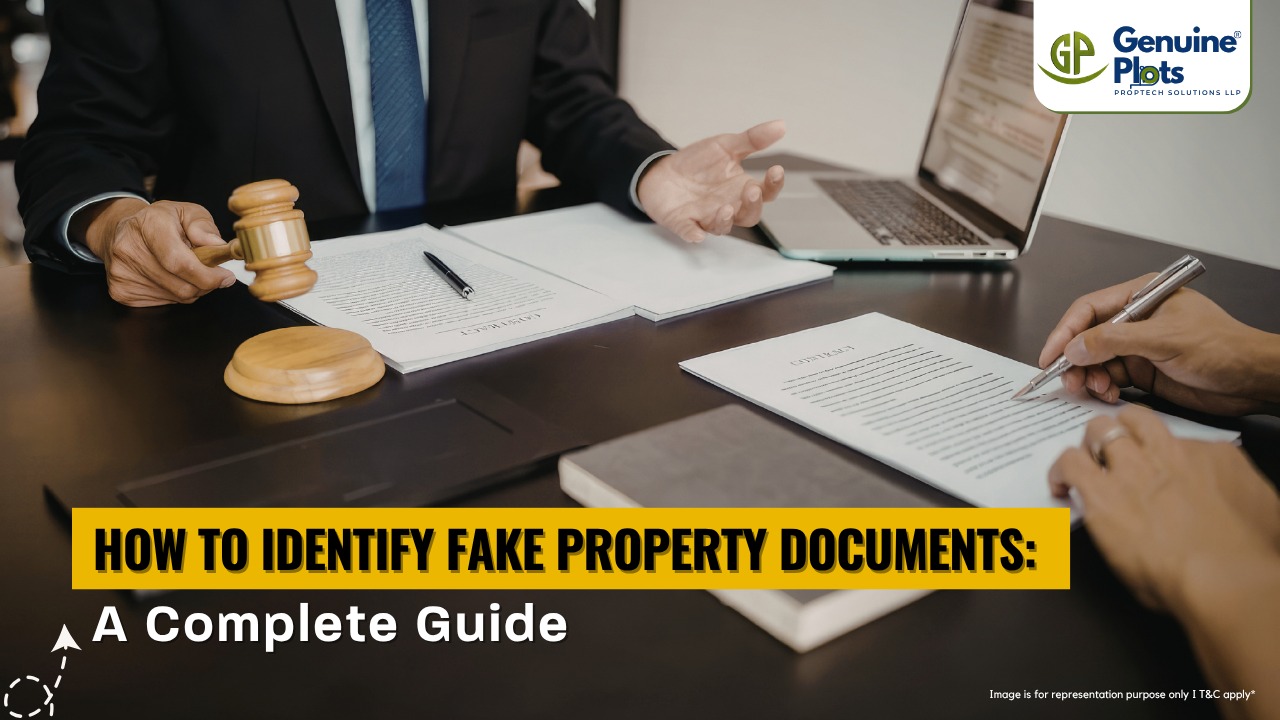
Making a land purchase is one of the biggest financial decisions an individual undertakes, and hence, checking all documents is absolutely crucial. In recent times, instances of fake documents, identity theft, and illicit sale of properties have been on the rise, putting buyers at a higher risk than ever. Being able to detect fake documents can help an individual avoid financial, legal, and mental troubles.
Here’s a detailed guide to help you identify fake or fraudulent property documents before sealing the deal.
- Warning Signs of Fake Property Documents
- Seller’s Hesitation to Share Property Papers
A genuine seller is always transparent. If the seller is evasive about showing title deeds, tax receipts, or ownership documents until the last moment, then that is a major warning sign.
What you should do:
Insist on seeing documents before negotiation.
Do not make any token payment without verification of documents.
- Spelling Mistakes or Inconsistencies
There is a high chance that fake documents contain spelling mistakes since the seller is in a hurry to forge or alter documents.
Common mistakes that are often found are:
Incorrect spelling of names
Incorrect addresses of properties
Inconsistent formats and layouts
Different survey numbers or plot numbers
Government documents are rarely found to contain such mistakes.
- Mismatch in Personal & Property Details
Always cross-check:
Aadhaar details of the seller
PAN details of the seller
Property ID details
Area measurements
Survey numbers
If any details are found to be mismatched, then the documents are manipulated or fake.
- Why Property Document Verification is Important
- Safeguards Your Investment
Real estate involves large sums of money. Proper document verification ensures you are investing in legally-owned property, not a forged or disputed one.
- Ensures Legal Compliance
Unverified properties may lead to:
Legal disputes
Heavy penalties
Inability to register the property
Risk of cancellation or confiscation
- Prevents Future Ownership Disputes
Forgery, double-sale scams, and incomplete paperwork can create long-term legal battles. When documents are verified beforehand, the chances of dispute reduce significantly.
- Common Fake Property Documents to Watch Out For
- Forged Title Deeds
Title deeds can be forged or completely fabricated. Scammers use this tactic to sell land that does not belong to them.
How to verify:
Cross-checking the details with the local municipal or revenue department
Requesting an Encumbrance Certificate (EC)
- Impersonation Fraud
Scammers use this tactic where fraudsters pretend to be the owner of the property.
How to verify:
Checking original Aadhaar and PAN documents
Matching the ID photo with the seller’s photo
Requesting utility bills or tax documents in the owner’s name
- Fake Encumbrance Certificates
An EC is a document that proves whether there are any financial or legal issues with the property. Scammers use this tactic where fraudsters forge an EC.
How to verify:
Requesting an EC from the sub-registrar’s office
Requesting an EC from the government’s official website
- Fraudulent Sale Deeds
Scammers use this tactic where fraudsters forge a sale deed that looks real but has never been legally registered.
Cross-check by:
Visiting the sub-registrar’s office
Asking for the document number and the year of registration
Checking stamp duty payment receipts
- How to Properly Verify Property Documents
Step 1: Verify Title Chain
Verify title ownership history for at least the last 30 years.
Step 2: Obtain Certified Copies
Always obtain certified copies from government offices instead of photocopies.
Step 3: Conduct Legal Title Search
Engage a property lawyer to check documents such as:
Title deed
EC
Mutation records
Layout permissions
Building permissions
Step 4: Meet Local Authorities
Meet officials at:
Municipal corporation
Revenue department
Electricity or water boards
Step 5: Verify Seller's Identity
Verify the seller's identity to ensure they are the original and existing owners.
Conclusion
Detection of fake property documents is not very difficult if one knows what to look for. Any red flags, such as misspelt words, discrepancies, or sellers being secretive about documents, must never be ignored. One must be very cautious and seek verification and expert advice from legal professionals and official government websites.
A little caution today will save your hard-earned money and provide a stress-free property deal tomorrow.