Prev Post
What Types of Land Can NRIs Buy in India
The country is undergoing a lifestyle shift, with people opting for more space, more green space, more wellness, and more slow living. The farmhouse and nature-centric communities, a luxury earlier or a weekend escape plan, are now turning out to be mainstream options for living and for investment.
Pune, with a combination of natural assets and economic development that is quite unparalleled in other parts of the country, is turning out to be one of the largest hotspots for this trend.
1. Farmhouses Evolving Into Multi-Purpose Lifestyle Assets
Farmhouses around Pune are no longer just holiday homes. They now serve multiple long-term purposes, such as:
- Personal retreats
- Remote work residences
- Wellness & meditation homes
- Organic farming spaces
- Boutique homestays & rental properties
- Investment assets with high land appreciation
Locations like Mulshi, Velhe, Marunji, Lonavala, Talegaon, Panshet, and Paud Road belts are attracting serious attention due to abundant greenery, hills, lakes, and proximity to the city.
2. Wellness-First Living Is Becoming a Priority
Residents increasingly prefer:
- Cleaner Air
- Being near nature
- Space for outdoor living
- Lower population density
- Healthier, Quieter Environment
This is causing consumers to drift away from the city centre and opt for the relaxing views of the outskirts.
3. Connectivity Improvements Are Fueling Demand
Pune’s infrastructure development is playing a huge role in making nature-led living practical and accessible.
Key improvements shaping this trend:
- Proposed Pune Ring Road
- Faster connections to Mulshi, Pirangut, Paud, Hinjawadi Phase 3
- Widening of major highways
- Metro expansion toward key nodes
- Rise of work hubs across West Pune
4. Rise of NA Plots & Customisable Nature Homes
Many buyers now prefer NA plots or legally clear farmhouse plots where they can:
- Design personalised villas
- Create curated landscapes
- Build eco-friendly homes
Implement sustainable living systems (solar, rainwater harvesting, organic farms)
This freedom of customisation is one of the biggest drivers behind the surge in nature-led living.
5. Biophilic & Sustainable Architecture Is Becoming Mainstream
Developers in and around Pune are adopting modern eco-design concepts such as:
- Open-to-sky courtyards
- Natural ventilation
- Green roofs & vertical gardens
- Earthy building materials
- Water-sensitive landscaping
- Low-density planning
Homes are intentionally designed to blend with nature, not compete with it.
6. Lifestyle Shifts Among Young Buyers & Professionals
A new category of buyers is emerging:
- Entrepreneurs
- IT professionals
- Creative freelancers
- Wellness-focused families
- NRIs returning to India
- They are choosing farmhouse living for:
- Hybrid work models
- Peaceful lifestyle
- Ability to host gatherings
- Healthier environment for children
- Lower long-term stress
This is transforming farmhouses into primary homes, not just second homes.
7. Strong Investment & Appreciation Potential
Farmhouse and nature-led properties around Pune are showing strong returns due to:
- Limited availability of scenic land
- High demand from local and outside buyers
- Proximity to Pune’s expanding tech & business hubs
- Rapid infrastructure development
- High rental income potential through short-stay villas and retreats
These factors make them future-proof assets in both lifestyle and investment terms.
8. The Rise of Eco-Communities & Wellness Townships
The future will bring more organised nature-led communities offering:
- Private farmlands
- Clubhouses in natural settings
- Lakeside decks
- Meditation gardens
- Cycling & trekking paths
- Community farming zones
- Low-density villas with large open spaces
These projects offer the best of both worlds: urban comfort + nature’s tranquillity.
Conclusion
The farmhouse and nature-led lifestyle is not just a mere preference or mood swing – it is turning out to be a long-term lifestyle change in India. Pune is a pioneer in its suitability for climate, geography, workplace practices, and connectivity.
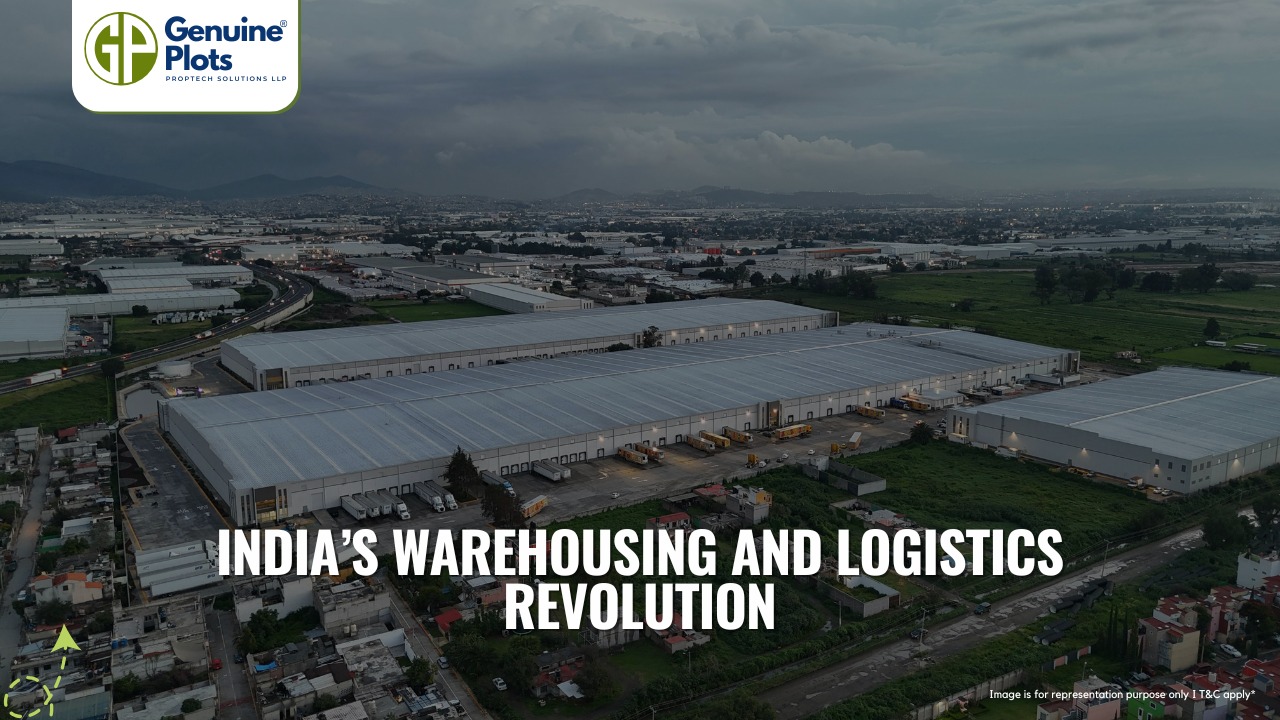
India is experiencing one of the most transformative phases in its economic story, and at its core is a rapidly evolving warehousing and logistics sector. From being recognised as a highly fragmented industry with poor infrastructure to becoming a strong backbone for growth, efficiency, and global competitiveness, logistics in India is emerging with great vigour. Policy reforms, the expansion of e-commerce, improved infrastructure, and technological innovation are strong forces reshaping how goods are stored, moved, and delivered across the country.
A Sector Fueled by Unprecedented Demand
The warehousing market in India has witnessed tremendous growth over the past few years. The demand for organised Grade-A warehousing space has grown significantly, driven by requirements from 3PL players, e-commerce giants, the manufacturing sector, the pharmaceutical industry, and the retail segment. Today, corporations demanding large spaces for storage are also wanting dedicated warehouse infrastructure designed for automation, quality control, and efficiency in flow. The result is transforming warehouses from being cost drivers to value drivers.
One key trend is the rise of large distribution centres near major consumption hubs. Cities such as Delhi-NCR, Mumbai, Bengaluru, Chennai, Pune, and Hyderabad have experienced a huge rise in the construction of warehouses. But that is not the end of it—the rise in warehousing demand is also increasing in Tier-II and Tier-III cities in India. These places are becoming essential nodes in a supply chain and helping products reach the final mile of delivery.
Policy Reforms Changing the Game
The involvement of the government has been catalytic in transforming the sector. The implementation of Goods and Services Tax has ensured ease in inter-state supply, thus eliminating the need to have small warehouse spaces, which were mainly used for tax exemption purposes.
The National Logistics Policy, Gati Shakti, Dedicated Freight Corridors (DFCs), and Multimodal Logistics Parks (MMLPs) are facilitating an integrated approach to logistics through road, rail, air, and seaports. These factors are gradually reducing logistics costs and making India an even more favourable destination for manufacturing and distribution on a global platform.
E-Commerce: The Acceleration Engine
There is not a single industry that has disrupted the Indian logistics market as much as e-commerce has done so far. Millions of deliveries and ever shorter time limits have forced the entire logistics system into a change that has happened overnight because now every company needs regionally scattered micro-warehouses, automatic sorting stations, and last-mile delivery stations for same-day deliveries.
This has ushered in an entirely different warehouse paradigm—one that’s small, tech-enabled, strategically located, and speed-optimised. The trickle-down impact is immense, ranging from automated packaging systems to artificial intelligence-powered inventory routing, all of which cut from the same cloth of innovation in the e-commerce space.
Technology: The New Backbone
The days when shelving and pallet jacks were prominent by their presence in a warehouse are over. Today, the list encompasses automation, robots, tracking systems by IoT, digital inventory management, sophisticated material movement equipment, and even drones to monitor activities. AI and analytics are used to predict consumption, cut wastages, and optimise routes. Blockchain is making its presence felt in documentation and even supply chain transparency.
This will help ensure minimal human error, decrease costs, and remarkably optimise efficiency. They also ensure that Indian logistics services are globally competitive and hence provide opportunities related to export-oriented production.
The Rise of Integrated Logistics Hubs
India is transitioning to mega integrated hubs that encompass warehousing, transportation, cold storage facilities, and added-value services altogether. Such hubs integrate roadways, freight rail corridors, and seaports for easy long-distance transport. The hubs symbolise India’s alignment with the best international practices as far as its logistics system is concerned.
A Future Built on Efficiency and Scale
The future will see an acceleration in the warehousing and logistics evolution in India. The coming trends will witness a focus on automation, sustainability, and multimodal routes. The coming years will see an increasing focus on Tier-II and Tier-III cities and an increasing inflow of investment and innovation in this space.
What was a patchwork system is rapidly developing into one of India’s most exciting and tech-savvy industries, to build a quicker, brighter, and stronger logistics system for the future.
10 Key Factors That Influence Land Appreciation A Complete Guide for Smart Investors

Land remains among the strongest and safest asset classes because it naturally appreciates over time. But what makes the value of one piece of land shoot up while the other remains stagnant? The answer to this question can be found in understanding the basics of what makes land appreciate.
1. Location: The Eternal Value Driver
Location remains the best determinant of land appreciation. Land near cities, roads, commercial centres, schools, and hospitals commands higher prices due to its accessibility and high demand.
A "well-located plot" appreciates in value faster – always2. Infrastructure & Connectivity
Roads, flyovers, Metro lines, airports, expressways, and even the provision of basic services affect land prices significantly.
Better connectivity = easier life = greater appreciation.
Even the announcement of new infrastructure can push land prices upward before the project is undertaken.
3. Zoning and Government Approvals
The zoning by-law determines what land use can be allowed on the land, such as residential, commercial, industrial, agricultural, or a mixed
When land undergoes zoning or the level of its development appreciates, its value can increase exponentially.
Government policies, incentives, and guidelines ease the process.
4. Economic Growth and Population Increase
As cities expand, more jobs are created. This brings more people closer to major economic centres. This increases demand not only for housing, shopping, and services but also for land.
High Demand + Low Supply = Increased Value.
5. Neighbourhood & Social Infrastructure
Facilities located in the surrounding area are an important factor in the attraction of land:
- Schools
- Hospitals
- Consumer belts
- Retail
- Parks
- Cultural spaces
A well-built neighbourhood enhances livability as well as appreciation values.
6. Physical Features and Natural Resources
The natural qualities of the land affect the degree to which it is considered
Flat or raised ground:
- Hill views
- Water bodies
- Stable soil
- Scenic Surroundings
plots which have natural beauty or where it is easy to construct buildings usually entail higher charges.
7. Utilities & Development Readiness
Land equipped with:
- Water
- Electricity
- Sewage systems
- Internet connectivity
"Developable" land is regarded as being of greater value than "raw" or undeveloped land. This is because developable land causes fewer delays during the construction process.
8. Lack of Land Availability
"Land is a finite commodity, and when we deal with areas of high growth or regions with geographic constraints, the scarcity of land becomes the driving factor for land to be important."
Areas surrounded by hills, lakes, or already developed land appreciate in value at a higher rate due to the shortage of land.
9. Potential for future development
When large areas of land are available for the establishment of new enterprises, land prices soar.
New townships are planned.
Industries or IT parks are proposed.
Tourism zones start taking shape.
New expressways or metro lines are announced.
Smart investors study up-and-coming master plans and get in early to capture the long-term appreciation.
10. Market Demand, Trends & Timing
Land markets often have a tendency to move in cycles. Early entrants in emerging locations benefit from the steepest appreciation curve. Values go up if demand spikes due to lifestyle changes, migration, or investor trends.
Conclusion:
Whether you're the first one to buy property or a savvy investor, understanding these basics can allow you to discern plots that appreciate in value and make effective, future-oriented choices.
1. India’s economy is growing fast
More people are moving to cities, leading to higher demand for housing and offices.
Land prices remain lower than in many global cities.
New regulations (such as RERA) have made the sector more transparent.
India is building metros, highways, and airports—boosting the value of nearby land.
Global companies seek to invest in stable, long-term markets; India is well-suited.
2. How Foreign Money Enters India’s Real Estate
Main ways international money comes in:
- Investment funds and private equity buy land or partner with developers.
- Sovereign wealth funds (government-backed global funds) invest in big projects.
- Multinational developers bring money + expertise to build modern projects.
- NRIs buy homes, land, and commercial property for investment.
- Global companies set up offices, tech parks, and warehouses.
3. How International Investment Boosts the Land Market
a) More Money for Land Buying
Foreign investors give developers the money needed to buy large land parcels.
This increases land demand → land prices rise.
b) Faster and Bigger Projects
Foreign partners help build:
- townships
- malls
- office parks
- warehouses
- data centres
This increases land values in surrounding areas.
c) New Types of Real Estate
International investors support new-age sectors like:
- logistics parks
- industrial corridors
- co-working spaces
- senior living
- student housing
- data centres
These require large tracts of land, thereby increasing land demand.
d) Higher Standards and Better Design
- Foreign developers bring:
- modern architecture
- global construction standards
- eco-friendly buildings
- smart technology
This improves the overall quality of real estate in India.
e) More Jobs and Economic Growth
International investment accelerates construction, which creates:
- direct jobs (construction workers)
- indirect jobs (material suppliers, services)
- A healthier economy → higher land demand.
4. Why NRIs Play a Big Role
NRIs invest heavily because:
- They want to build assets in India.
- They earn in stronger currencies → property feels “cheaper.”
- They prefer long-term investments like land and real estate.
- Digital buying and virtual tours have made it easier.
NRIs are major buyers in:
- luxury homes
- plotted developments
- vacation homes
- commercial property
Their investments push demand and raise land prices.
5. Positive Effects on India’s Land Market
The land boom happens because foreign money:
- increases demand for land
- speeds up project launches
- improves market confidence
- brings better technology and design
- increases transparency
- makes real estate more professional
- supports new infrastructure around land parcels
Overall result → land becomes more valuable, more usable, and more productive.
6. Challenges to Keep in Mind
Even though international investment helps, it also brings risks:
- Land prices may rise too fast
- Foreign funds can pull out during global crises
- Land acquisition issues can slow projects
- Some cities may get overheated due to too much investment
- India must manage this growth carefully.
7. Conclusion
International investment has become a major fuel for India’s land boom.
It brings:
- capital
- confidence
- expertise
- global quality standards
- long-term stability
This combination has made India one of the world’s most attractive real estate and land markets.
Purchasing property in India can be an NRI’s dream fulfilled – it could be a part of one’s homeland, a safe investment opportunity, or a holiday destination in the future. However, many NRIs make common mistakes that could make their “dream” a “nightmare.” Research is required before purchasing any land.
1. Not Verifying the Land Title and Ownership
Purchasing land without properly verifying the title documents is one of the most common mistakes made by NRIs. There may be disputes over title papers or legal issues associated with them.
Tip: Always check the original title deed and encumbrance papers and any pending litigation on the said property. Get a lawyer to check its validity.
2. Ignoring Local Regulations
Land in India is governed by various rules regarding zoning, uses, and construction, which vary from state to state and even municipality to municipality. At times, NRIs fail to account for this and find themselves in a tricky situation later on.
Tip: Check if the property is a residential, commercial, agricultural, or restricted one for NRI purchase. Take advice from local sources before signing any agreement.
3. Skipping Physical Inspection
Most NRIs rely on pictures, videos, or an agent for property evaluation. This may prove dangerous since the property may have disputes, boundary problems, or may not even be suitable for construction.
Tip: If possible, visit the property yourself or appoint a representative to view the property in-person.
4. Overlooking Future Development Potential
Purchasing land without a concern for its connectivity and infrastructure can reduce its value. It may look ideal today, but it may remain so or become a difficult-to-sell land property in the future.
Tip: Make sure to check out local developments, roads that are going to be built soon, utilities, and the surrounding area expansion before.
5. Relying Solely on Agents or Relatives
Though these recommendations from agents or family members are useful, NRIs can sometimes rely solely upon them. This can cause miscommunication and even deception if not checked.
Tip: It is essential to validate all details independently. Please seek legal and property counsel.
6. Ignoring Tax and Compliance Rules
NRIs must comply with Indian regulations for land purchases, including FEMA guidelines, remittance limits, and tax obligations. Skipping this results in penalties or lawsuits.
Tip: Get legal and professional advice on NRI property laws from a tax consultant or Genuine Plots.
Conclusion
Buying land as an NRI can be a rewarding investment, but due diligence, research, and legal verification must go into it. Steer clear of these common mistakes and seek professional advice for an informed decision-one that will surely help you protect your investment and your peace of mind.

Wellness is no longer just a lifestyle choice — it has become a core priority for Indian homebuyers. From air-purifying homes to green community spaces, wellness real estate is transforming the way residential projects are planned, built, and marketed in India. The shift is driven by health-conscious consumers, post-pandemic awareness, and developers recognising that “healthy living” is now a key differentiator.
1. What Is Wellness Real Estate?
House and community planning to enhance physical, mental, and emotional well-being.
Key Features
- Air Purification and Ventilation Systems
- Water filtration and sanitation improvements
- Natural greenery in abundance, open spaces, biophilic philosophy
- Indoor and outdoor spaces for a "lifestyle"
- Yoga lawns, jogging tracks, cycling paths
- Natural Light, Sound Reduction, Non-Toxic Materials
- Health-oriented smart tech (air quality monitors, climate control systems)
All these factors come together to provide for an environment that supports overall well-being.
2. Rising Health Consciousness Among Buyers
Why Demand Is Increasing
Following the pandemic, consumers are drawn to properties that have a positive impact on immunity, stress, and mental well-being.
- Lifestyle diseases are on the rise: stress, pollution, and sedentary behaviour are driving demand for healthier living environments.
- Millennial mentality: Experience and wellness have become more important to modern consumers than simple luxury.
Consumers in today’s world are no longer content with the typical amenities associated with the dwelling; they require homes that will increase the quality of their life.
3. Developer Response
Developers have incorporated principles related to wellness in master plans, architecture, and design. Landscape gardens, forest trails, herbal gardens, community orchards
Meditation room access, walking trails, and patches for organic farming.
4. Well-Being Advantages for Residents
- Cleaner air means fewer respiratory problems.
- Higher levels of sunlight improve sleep and mood.
- Fitness areas promote exercise
- Purified water systems are safe for drinking.
- Nature-connected spaces reduce stress
- These promote relaxation as well as meditation
- Community gardens and open spaces promote bonding.
- Better indoor quality improves productivity and concentration
5. Market Growth & Investment Value
Wellness real estate is not only a lifestyle trend — it is also a strong investment category.
Why It’s Growing Fast
- Properties with wellness features command 10–30% higher premiums
- Homes in wellness communities have better resale value
- Higher rental demand from health-conscious tenants
- Strong appeal among NRIs and global buyers
- Developers offering wellness as a core USP to stand out
Wellness real estate does not remain restricted to apartments or villas. The concept of "plot" investments has started emerging as a powerful manifestation of the trend. Today, most buyers are keenly interested in second plots of land or farmland where owners can build their own personalised wellness destinations away from the stress of city life. Plot projects situated in the vicinity of natural zones such as hill slopes, forest fringes, lake shores, or sparsely populated suburbs offer the benefits of fresh air, ample space for commuting, areas for organic farming, and the freedom to build a residence to suit their wellness needs. Plots allow families to have a garden of their own choice where they can sit for their morning/afternoon "power" meditation sessions, as well as for holding indoor/outdoor seating arrangements for their "power" dinners. The plots are also ideal for constructing eco-friendly structures.
The Bottom Line
Wellness real estate is not a temporary trend. It is evolving into the future standard of residential living in India — healthier homes, healthier communities, and healthier lifestyles.
Recent Posts
Tags
Bhunaksha,
genuine plots,
Land For Sale,
Maharashtra Bhunaksha,
plots for sale,
Gunthewari,
Gunthewari Land,
Gunthewari Rules,
Extract Documents,
Plots and Lands,
Saat Baara,
Extract Saat,
Baara Utara,
Jamabandi,
property tax payments,
Gram Panchayat,
lower prices,
non-agricultural land,
Lower Investment Cost,
Gram Panchayat lands,
Fresh Land Settlements,
Growing demand,
affordable homes,
genuine p,
legal Land,
bungalow plots,
Konkan,
Maharashtra,
Purandar,
Pune,
Karnataka,
Bangalore,
Farm Land,
Kolkata,
Rajarhat,
Indore,
Chhatrapati Sambhajinagar,
Aurangabad,
Mundhwa,
Agricultural Land,
Farmhouse Plot,
Rules And Penalties,
Residential Plots,
NA PLots,
Residential NA Plots,
Commercial NA Plots,
Animal Husbandry Land,
Tathawade,
Vahivat Land Maps,
Vahivat,
Indian Land Records,
Ownership Rights,
Red zone,
PCMC,
Dehu Road,
Land Registration Rules,
Land Investing,
Infrastructure Growth,
Land Ownership,
Land Encroachment,
Panshet Dam,
Varasgaon Dam,
Verified Land,
Plot For Sale,
Land Investment,
Verified Plots,
Land Acquisiton,
Hydrological Survey,
Invest In Land,
Verified Land Plots,
Panshet,
Khadakwasla,
Land Rules,
Dakhil Kharij,
Land Registry,
Property Onwership,
Clean Title Check List,
Property Verification,
Digital Registry,
Farm Plots,
Agro Property,
Land Value Growth,
Urban Expansion,
Senapati Bapat Road,
Registered Land,
Agricultral Plot,
Purandar Airport,
Safe Investment,
Secure Property,
Plot Buyers,
Approved Plots,
Land ROI,
NA Approved Plots,
NA Land,
Welspun One,
Logistic Park,
Talegaon,
PMC Bharat Mandapam,
Urban Development,
Lohgaon,
Close To Nature,
Gated Community Plots,
Buy Land VS Gold Investment,
NRI Investment,
Future Ready Living,
Trusted Plots,
Plot Investment,
Authentic Land,
Safe Land Buying,
Mumbai,
Premium Plots,
MMR Land Investment,
MMR Infrastructure,
Metro Connectivity,
Plots in Mahabaleshwar hill station investment,
Mahabaleshwar land prices and future growth,
Scenic residential plots in Mahabaleshwar,
Mumbai 3.0,
Mumbai 3.0 vs Mumbai 2.0,
Mumbai property investment,
Real estate investment in Mumbai,
Upcoming residential projects in Mumbai,
CIDCO plot auctions,
CIDCO auction Navi Mumbai,
Upcoming CIDCO plot auctions 2026,
CIDCO land auction dates,
Navi Mumbai plot auctions,
CIDCO plots in Navi Mumbai,
CIDCO plots in Kharghar,
CIDCO plots in Ulwe,
NMIA investment opportunities,
Mumbai 3.0 plotted development,
Mumbai 3.0 real estate,
Plots in Mumbai 3.0,
Land investment in Maharashtra,
Residential plots near Mumbai,
Land appreciation in Mumbai 3.0,
Residential land for sale in Mumbai 3.0,
Altamura NA Plots,
Altamura Nadar City,
NA Plots in Nadar City,
Nadar City Plots,
Plots in Nadar City,
YEIDA plots,
YEIDA plots near Noida Airport,
Noida Airport plots,
Jewar Airport investment,
Yamuna Expressway plots,
YEIDA plot scheme 2026,
Noida Airport real estate,
Zepto,
Zepto effect,
D2C brands India,
Urban consumer trends,
Marketplace evolution,
Urban infrastructure growth,
YEIDA Residential Plot Scheme,
Yamuna Expressway Plot Scheme,
YEIDA Residential Plots,
Yamuna Expressway Authority,
Noida Investment,
Residential Plots in Lucknow,
LDA Plots in Lucknow,
Lucknow Real Estate,
LDA Approved Plots,
Plots for Sale in Lucknow,
Lucknow Property Investment,
Land Investment in Lucknow,
Residential Land in Lucknow,
Buy Plot in Lucknow,
Lucknow Development Authority,
Maharashtra Fragmentation Law 2025,
Fragmentation Act Maharashtra,
Maharashtra land law update 2025,
Maharashtra land reforms 2025,
Land subdivision rules Maharashtra,
Maharashtra agriculture land purchase rules,
Agricultural land purchase restrictions Maharashtra,
Can non-farmers buy agricultural land in Maharashtra,
NA conversion process Maharashtra,
Collector permission for land purchase,
farmland prices in Nagpur,
agricultural land price in Nagpur per acre,
farmland cost in Nagpur Maharashtra,
Nagpur agricultural land investment,
per acre agricultural land rate in Nagpur,
Tukdebandi Law Maharashtra,
Maharashtra Fragmentation Act update,
Land subdivision law Maharashtra,
Agricultural land division Maharashtra,
Maharashtra land reform ordinance,
Plot registration Maharashtra,
Farmland prices Nagpur,
Nagpur agricultural land rates,
Farmland per acre Maharashtra,
Agricultural land price Nagpur,
Farm land cost Nagpur,
Nagpur real estate trends,
Land investment Nagpur,
Avani Farms,
Avani Farms Pune,
Farmland near Pune,
Farm plots for sale,
Agricultural land investment,
Gated farmland near Pune,
NRI agricultural land rules India,
Can NRI buy agricultural land in India,
FEMA rules for NRI property purchase,
RBI guidelines for NRI land investment,
NRI farmland investment India,
Agricultural land purchase by NRI,
Maharashtra Fragmentation Act,
Minimum plot size in Maharashtra,
Guntha rules Maharashtra,
Agricultural land division rules,
Minimum land area for sale in Maharashtra,
Legal plot size in guntha,
Guntha conversion rules,
NRI land purchase in India,
Can NRIs buy agricultural land in India,
NRI property investment India,
NRI buying residential land,
NRI real estate guidelines India,
Investment tips for NRIs in India,
Mutation Entry Process,
Land Mutation in India,
Property Mutation Process,
Land Ownership Transfer,
1 guntha na plot prices in pune 2026,
1 guntha plot price in pune,
na plots in pune,
residential na plots pune,
guntha plot rate in pune,
na plot investment in pune,
plots near purandar airport,
1 Acre Land Price in Pune,
Pune Land Rates 2025,
Pune Land Price 2026,
Pune Acre Land Cost,
Land Value Pune,
Agricultural Land Price Pune,
gated community plots in Hinjewadi,
Hinjewadi plots for sale,
residential plots in Hinjewadi Pune,
premium plots in Hinjewadi,
plots near Rajiv Gandhi Infotech Park,
land for sale in Hinjewadi Pune,
Pune property investment,
plots for sale in Pune below 5 lakhs,
Pune rural land investment,
gated plotting projects Pune,
MIDC growth corridor plots,
Residential plots for sale in Hinjewadi,
Plots in Hinjewadi Pune,
Land for sale in Hinjewadi,
Residential NA plots Hinjewadi,
Hinjewadi real estate trends 2026,
Nashik land investment,
Trimbakeshwar land for sale,
Simhastha Kumbh 2026,
Simhastha Kumbh 2027 real estate impact,
Trimbakeshwar property investment,
Land appreciation in Nashik,
plots for sale in pune,
types of plots in pune,
residential plots in pune,
agricultural land in pune,
villa plots in pune,
NRI agricultural land purchase India,
NRI property investment in India,
Agricultural land rules for NRIs,
NRI real estate investment India,
NA plot meaning,
what is NA land,
NA land in Maharashtra,
land investment guide,
NRI agricultural land in Telangana,
Telangana land laws for NRI,
Telangana real estate laws,
NRI investment guide Telangana,
Legal compliance for NRI property,
NRI farmhouse purchase India,
RBI guidelines for NRI property,
NRI land buying rules,
Godham Eco Village,
Godham Eco Village for NRIs,
NRI land investment in India,
Investment plots for NRIs,
Secure land investment India,
NRI property buying guide,
plots in Pune,
NRI buying property in India,
NRI guide to buying land in Pune,
NRI land investment in Pune,
NRI property documents checklist,
Maharashtra land reform 2025,
Maharashtra land laws update,
Agricultural land rules in Maharashtra,
Buying agricultural land in Maharashtra,
Non-agricultural land conversion Maharashtra,
Maharashtra agricultural land rules 2024,
agricultural land purchase in Maharashtra,
non agriculturist land purchase rules,
who can buy agricultural land in Maharashtra,
Maharashtra land laws for non farmers,
Guntha based land rules,
Minimum guntha rule Maharashtra,
Maharashtra land laws,
Maharashtra agricultural land laws,
farmland investment Maharashtra,
buying farmland legally in Maharashtra,
NA conversion rules Maharashtra,
agricultural land eligibility criteria,
Property Mutation in India,
Land Record Update,
Revenue Records,
Property Ownership Transfer,
Mutation of Property,
Farmhouse Plots Near Pune,
NRI Investment in Pune,
Pune Real Estate,
Plots for Sale Near Pune,
Luxury Farmhouse Plots,
Pune plot scams,
Plot buying checklist,
Legal verification for plots,
NA plot verification,
Plot buying tips Pune,
Godrej Properties,
Evora Estate Panipat,
Luxury plots in Panipat,
Premium land investment,
Residential plots in Panipat,
Lodha Developers,
Lodha Developers Q3 acquisition,
Lodha land parcels Q3,
Indian real estate news,
New residential projects India,
Real estate investment news,
Premium housing projects,
Srijan Group,
Kolkata Tech Park,
Commercial Real Estate,
Real Estate Investment,
Real Estate Deal News,
NRI investment in India,
NRI land investment,
Plots for sale in India,
NRI property investment,
Can NRI buy residential plot in India,
NRI land purchase rules,
Residential plots for NRIs,
NRI real estate investment,
NRIs buying property in India,
Can NRIs buy plots in India 2026,
RBI rules for NRI property purchase,
NRI land investment rules,
MMR 3.0,
MMR real estate 2026,
Mumbai real estate market,
Navi Mumbai investment,
Thane property market,
Mumbai property trends 2026,
Land investment in MMR,
Mumbai smart city project,
Korea Mumbai partnership,
MMRDA infrastructure projects,
Korean investment in India,
MMR GDP growth,
MMR economic roadmap 2030,
Mumbai real estate,
Public private partnership projects Mumbai,
Investment opportunities in MMR,
Mumbai Metropolitan Region,
Mumbai urban development,
MMR 2047 vision,
Mumbai infrastructure projects,
Navi Mumbai development,
Goa property investment,
Invest in Goa 2026,
Goa real estate market 2026,
Best places to invest in Goa,
North Goa property,
Property appreciation in Goa,
Goa plots for sale,
Commercial property in Goa,
Buy property in Goa,
YEIDA plots 2026,
Residential plots in YEIDA,
YEIDA new scheme update,
Plots near Noida International Airport,
Yamuna Expressway Authority plots,
YEIDA housing scheme details,
Lucknow land investment,
Property in Lucknow,
Buy plots in Lucknow,
Nashik plots for sale,
Kumbh Mela 2026 Nashik,
Land investment in Nashik,
Nashik property market 2026,
Plots near Kumbh Mela Nashik,
Residential plots in Nashik,
Upcoming projects in Nashik,
Property appreciation in Nashik,
Maharashtra land investment,
Nashik Kumbh Mela 2026,
Kumbh Mela investment opportunities,
Infrastructure development in Nashik,
Plots near Nashik Kumbh Mela,
High ROI land investment,
MIHAN,
MIHAN Nagpur,
Nagpur Real Estate,
Agricultural Land Nagpur,
Nagpur Property,
Plots Near In MIHAN,
Pune residential plots,
best areas to buy plots in Pune,
Pune land investment,
investment plots in Pune,
buy land in Pune,
real estate investment in Pune,
Godrej Plots Doddaballapur,
Doddaballapur plots for sale,
Plots in North Bangalore,
Godrej Properties plots,
Residential plots in Doddaballapur,
Investment plots near Bangalore,
Gated community plots Bangalore,
Premium plots in Doddaballapur,
plots in Mahabaleshwar,
Mahabaleshwar villa plots,
farmhouse plots in Mahabaleshwar,
land for sale in Mahabaleshwar,
bungalow plots in Mahabaleshwar,
hill station property investment,
agricultural land in Mahabaleshwar,
premium land in Mahabaleshwar,
Plots in Pune under 3 lakhs for sale,
Budget residential plots near Pune,
Low cost plots near Pune highway connectivity,
plots in Pune under 3 lakhs,
farmland plots near Pune city,
Investment plots near Pune under budget,
Residential land near Pune,
Godrej plots in Pune,
Premium plotted development by Godrej in Pune,
Residential land for sale by Godrej,
Premium plot by Godrej,
Plots for sale in Hadapsar Pune,
Residential plots in Hadapsar,
Investment plots in Hadapsar,
Gated community plots in Hadapsar,
Ready to build plots in Hadapsar,
1 Guntha plot in Pune,
1 Guntha plot in Pune for sale,
1 Guntha plots near Pune city,
Residential 1 Guntha land in Pune,
Clear title 1 Guntha plot in Pune,
1 guntha plot price in village,
village plot rate per guntha,
affordable 1 guntha land in rural area,
residential plot in village Pune,
farmland plot price per guntha,
Residential 1 Guntha plot near Pune city,
Investment plots in Pune 1 Guntha,
Clear title 1 Guntha land in Pune,
Agricultural 1 Guntha plot near Pune,
1 Guntha plot in Pune Katraj for sale,
Residential plot in Katraj Pune 1 Guntha,
Katraj Pune land for home construction,
1 Guntha NA plot in Katraj Pune,
Pune Katraj plot near highway connectivity,
Gated plot project in Katraj Pune,
NA plots in Pune under 10 lakhs,
Affordable NA plots near Pune city,
NA residential plots in Pune,
NA approved plots in Pune under 10 lakhs,
Investment plots in Pune under 10 lakhs,
Residential NA plots near Pune highway,
Best plots in Pune below 10 lakhs,
Premium villa plots in Pune,
Residential villa plots in Pune near city outskirts,
Luxury villa plots in Pune,
Gated villa plot project in Pune,
Villa plot site visit in Pune,
NA plots in Pimpri Chinchwad for sale,
Residential NA plots in PCMC area,
NA approved plots in Pimpri Chinchwad,
NA land with clear title in PCMC,
NA plots near Pune Mumbai Highway PCMC,
Godrej Villa Plots Doddaballapur,
Godrej plotted development Bangalore,
villa plots in North Bangalore,
premium villa plots Bangalore,
Godrej Properties plots Bangalore,
Brigade Plots Malur,
Brigade Malur plots,
plots in Malur East Bangalore,
investment plots in East Bangalore,
residential plots in Malur Bangalore,
Brigade Group plots Bangalore,
land investment in East Bangalore,
gated community plots in Malur,
prestige plots devanahalli,
prestige plots in devanahalli bangalore,
plots for sale in devanahalli,
prestige plots investment,
premium plots in devanahalli,
residential plots near kempegowda airport,
What is NA plot in real estate,
NA land meaning in property,
NA approved plotsDifference between NA and agricultural land,
Buying NA plots in Maharashtra,
NA plot vs agricultural land,
Plot prices in Mysore,
Mysore infrastructure projects,
Mysore property investment,
Land investment in Mysore,
Plot investment opportunities,
land buying guide in goa,
buy land in goa,
plots for sale in goa,
legal process to buy land in goa,
property in goa,
residential plots in goa,
Nashik Simhastha Kumbh Mela 2026,
Sadhugram expansion Nashik,
Maharashtra Kumbh Mela planning,
Nashik Kumbh Mela preparations,
tourism development in Nashik,
plots in Nagpur,
Nagpur plot investment,
land for sale in Nagpur,
residential plots in Nagpur,
golden rules before buying plots in Nagpur,
Nagpur land investment,
plot investment in Nagpur,
land investment in Nagpur,
plots for sale in Nagpur,
best areas to buy plots in Nagpur,
buying plots in Nagpur,
plot purchase checklist,
legal checklist for buying land,
documents required for plot purchase,
NA plots in Nagpur,
Tattvana,
Tattvana in Kamshet,
Moregaon Farmland Estates,
farmland investment Pune,
agricultural land investment,,
farmland for sale near Pune,
farm plots in Pune,
gated farmland projects,
agricultural plots Maharashtra,
open plot vs NA plot,
difference between open plot and NA plot,
what is NA plot in India,
open plot meaning in real estate,
NA land vs agricultural land,
residential NA plots benefits,
land investment in India,
buying NA plot vs open land,
capital gains on agricultural land,
rural vs urban agricultural land tax,
agricultural land tax rules India,
capital gains tax India property,
is agricultural land taxable,
rural agricultural land exemption,
urban agricultural land tax India,
Runwal Enterprises Alibaug township,
Alibaug real estate,
coastal real estate India,
township projects in Alibaug,
luxury properties in Alibaug,
Mumbai weekend homes investment,
Alibaug property investment,
isprava south goa,
ultra luxury villas in goa,
south goa real estate,
luxury homes in goa,
isprava projects goa,
premium villas in south goa,
land investment advisory services,
secure land investment,
real estate advisory services,
verified land deals,
investment plots near Pune,
land buying guide India,,
#KanpurRealEstate,
#KDAPlots,
#KanpurProperty,
#RealEstateKanpur,
#PropertyTrends,
Gokul Plots investment,,
real estate investment Gokul,,
plots with high appreciation potential,
smart land investment strategies,
plots for sale in North Bangalore,
land investment Bangalore,,
emerging areas in North Bangalore,
residential plots Bangalore,,
Bangalore real estate investment,,
North Bangalore property trends,,
plots near airport Bangalore,,
HUDA plots in Gurgaon,
HUDA plots in Faridabad,
residential plots Haryana,
HUDA approved plots,
plots for sale in Gurgaon,
plots in Faridabad investment,
Prestige Marigold plots,,
Bangalore plotted developments,
land investment Bangalore,
best plots in North Bangalore,
#PlotsForSaleInNellore,
#NelloreRealEstate,
#NellorePlots,
#RealEstate2026,
#PropertyInvestment,
#NelloreProperty,
#AndhraPradeshRealEstate,
GMADA E Auction 2026,
GMADA plots Mohali,
plots in Mohali for sale,
GMADA Mohali auction process,
buy plots in Mohali,
Punjab property investment,
GMADA scheme 2026,
Mohali real estate,
HSVP plots 2026,
HSVP plot investment,
HSVP plots Haryana,
land investment benefits,
residential plots investment,
government approved plots,
buy plot in New Chandigarh,
flats in New Chandigarh,
New Chandigarh real estate,
property investment in New Chandigarh,
residential plots in New Chandigarh,
apartments in New Chandigarh,
#WaveCityGhaziabad,
#GhaziabadPlots,
#PlotsInGhaziabad,
#NCRRealEstate,
#RealEstateInvestment,
#ResidentialPlots,
APIIC vacant plots,
APIIC plots for sale,
industrial plots in Andhra Pradesh,
commercial land for MSMEs,
startup investment plots,
APIIC industrial land,
HUDA plots,
HUDA plots investment,
property appreciation,
plot investment benefits,
high return property investment,
land appreciation,
#GDAPlotsInGhaziabad,
#PlotsForSaleInGhaziabad,
#ResidentialPlotsGhaziabad,
#InvestmentPlots,
#RealEstateGhaziabad,
#GDAApprovedPlots,
#BaliProperty,
#PropertyInBali,
#IndiansInBali,
#BaliRealEstate,
#InternationalPropertyInvestment,
buy plots in Sarjapur Road Bangalore,
plots in Sarjapur Road,
residential plots in Sarjapur Road,
land for sale in Sarjapur Road Bangalore,
investment plots in Bangalore,
plots near IT corridor Bangalore,
how Indians can buy property in Bali,
buy property in Bali for Indians,
Bali property investment,
property in Bali for Indian buyers,
Bali real estate guide,
foreign property investment Bali,
legal checks before buying property in Bali,
Indians invest in Bali property,
due diligence for Bali property,
Bali real estate for Indians,
Bali property legal verification,
verified farmland plots,
100% verified farmland plots,
farmland investment India,
legal farmland plots,
farmland plots for sale,
Konkan land investment,,
high-growth corridors Maharashtra,
land investment 2026,
plots for sale in Maharashtra,