Prev Post
No previous post available
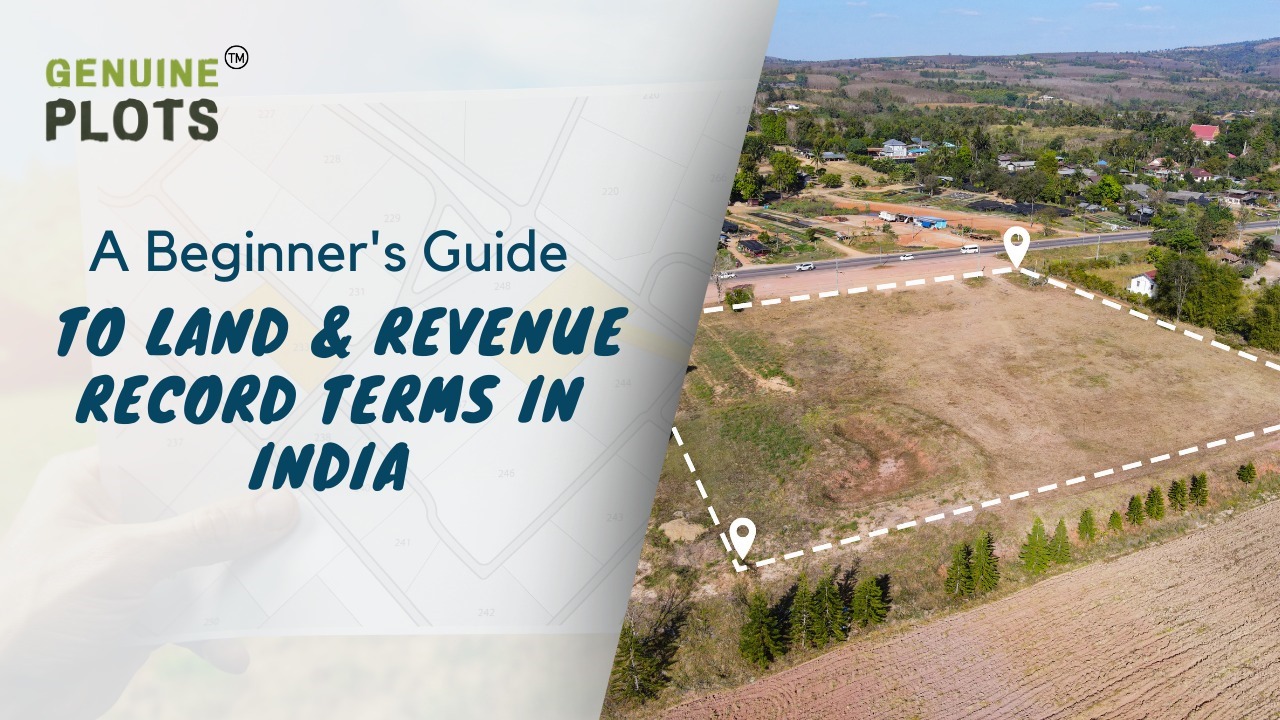
Land transactions can be a labyrinth of confusing terms, especially when checking records online. In this simplified guide, Genuine Plots unravels key terms, empowering you to make informed decisions and ensuring smooth navigation through the world of land transactions. Let's embark on this journey together, where understanding land records becomes as easy as a walk in the park.
Jamabandi
Nakal
Khata
Khasra or DAG Number
Khewat
Mauza
Bainama
Khatauni
Patta
Khudkasht
Embarking on a land transaction journey can be daunting, but armed with these simplified explanations, you'll be better equipped to decode the complexities of land records.
Prev Post
No previous post available

1. What is the current price range for plots in Mahabaleshwar?
As of 2026, plots in Mahabaleshwar typically range from ₹4,479 per sqft to ₹9,946 per sqft on average. Prices vary by location, plot size, and views. Premium areas like Panchgani–Mahabaleshwar Road and SH-58 command significantly higher rates due to tourism, accessibility, and valley views.
2. Are affordable plots available in Mahabaleshwar?
Yes, buyers looking for affordable plots in Mahabaleshwar can find options under ₹40 Lakhs in areas like Tapola Road, Dhardev, and Wai. For example, 6,533 sqft plots for ₹21 Lakhs and 3,000 sqft plots for ₹25 Lakhs are common in this segment.
3. What are the typical prices for mid-range or luxury plots in Mahabaleshwar?
Mid-range to luxury plots for sale in Mahabaleshwar usually fall between ₹50 Lakhs and ₹2 Crore. Localities like Kuroshi, Metgutad, and Tapola-Nivali offer larger plots suitable for bungalows, farmhouses, or eco-stay investments.
4. Are high-end or large parcels of land available in Mahabaleshwar?
Yes. Investors seeking premium Mahabaleshwar plots for sale can explore large parcels above ₹2 Crore, including 2.5-acre plots priced between ₹3.7 Cr to ₹14 Cr. These are commonly located near prime stretches such as Panchgani–Mahabaleshwar Road.
5. Which localities are best for buying a plot in Mahabaleshwar?
Popular locations for plots in Mahabaleshwar include Tapola Road, SH-58, Panchgani–Mahabaleshwar Road, Wai, and Satara Medha Road. These areas are known for good accessibility, scenic views, and rising investment potential.
6. What is driving the price appreciation of plots in Mahabaleshwar?
Price appreciation for plots for sale in Mahabaleshwar is driven by:
Nearby areas like Wai (up 14.24%) and Godoli (up 27.8%) also show an upward trend.
7. How will the New Mahabaleshwar Development Project impact land value?
The New Mahabaleshwar project—spanning Satara, Jaoli, Patan, and Mahabaleshwar—is expected to significantly boost the value of plots in Mahabaleshwar. With government-backed improvements in connectivity, infrastructure, and tourism facilities, long-term appreciation potential is very strong.
8. Are Mahabaleshwar plots suitable for second homes or investment?
Absolutely. Many buyers prefer plots in Mahabaleshwar for holiday homes, farmhouses, boutique resorts, and eco-stay projects. The blend of natural beauty, tourist footfall, and improving infrastructure makes it an ideal long-term investment.
9. What documentation should I check before buying a plot in Mahabaleshwar?
Before buying plots for sale in Mahabaleshwar, ensure:
Plots with valley views and main-road access usually have a higher value.
10. Are agricultural and NA plots both available in Mahabaleshwar?
Yes, both agricultural and NA plot options in Mahabaleshwar exist. Agricultural land is usually cheaper, but if you plan to construct, ensure the plot has NA status or can legally be converted.
11Is now a good time to buy a plot in Mahabaleshwar?
With rising tourism demand, the New Mahabaleshwar project, and steady price appreciation, Mahabaleshwar plots for sale offer strong investment potential in 2026. Early buyers stand to benefit the most as development accelerates.

Many landowners don’t realise that the land they already own can become a steady, long-term source of income. Whether it’s agricultural, commercial, vacant, or even remote land, there are proven ways to monetise it—often without selling the property.
If you own land and aren’t generating income from it, you might be leaving money on the table every single month.
Below is a detailed look at the top income-generating land types and practical ways to turn any land into a revenue stream.
1. Agricultural & Arable Land – Your Land Can Feed Others AND Your Wallet
Agricultural land is one of the most dependable income assets. Even if you don’t farm yourself, farmers will lease agricultural land at stable rates.
How it earns:
Growing high-value crops like turmeric, flowers, or organic vegetables
Bonus: Demand for chemical-free organic produce is increasing, giving owners better pricing.
2. Commercial Land – The Highest Income Potential
Commercial land near highways, industrial zones, or busy areas can generate significant monthly income.
Ways to earn:
Commercial land earns the highest rental yield compared to other categories.
3. Vacant / Raw Land – More Valuable Than You Think
Vacant land is often ignored, but it has the widest range of income options.
Practical uses that need almost no construction:
If your land is near a highway, city edge, or tourist route, demand is even higher.
4. Timberland – Growing Trees That Pay You Back
If your land supports forestry, timber is a long-term but high-return option.
Income streams:
Trees grow without daily supervision—making it ideal for passive income.
5. Renewable Energy Sites – The Fastest-Growing Land Opportunity
Renewable energy companies are constantly searching for open land.
How you earn:
Once installed, these projects require minimal involvement from the landowner.
6. Recreational Land – Turning Nature Into Income
If your land has natural beauty, water access, or forests, it can become a destination.
This is especially profitable if your land is near a city or tourist zone.
How Landowners Actually Make Money
Here are the three main models used worldwide:
1. Leasing
You lease the land to a third party for:
Zero operational work for you.
2. Direct Operations
You run the business yourself:
Higher returns but requires involvement.
3. Resource-Based Income
The land itself produces the value:
The Secret: The “Highest and Best Use” Strategy
Every piece of land has a best possible use depending on:
Identifying this highest and best use can multiply income 5–10x.
If You Already Have Land, Don’t Delay—It Could Be Earning for You Right Now
Most people hold land for years without generating a single rupee, only waiting for appreciation.
But land can:
You don’t need to sell—your land can pay you steadily while its value increases.

Carbon credits are becoming an important way to fight climate change. One carbon credit equals 1 ton of carbon dioxide reduced or removed from the air.
Businesses, farmers, communities, and even countries use carbon credits to support cleaner, greener practices.
1. Encourages companies to reduce pollution
Companies try to reduce their emissions so they can earn carbon credits.
This pushes them to use cleaner machines, better technology, and eco-friendly methods.
2. Supports renewable energy projects
Solar plants, wind farms, hydropower units, and biomass projects earn carbon credits for producing clean energy.
This helps them get more funding and grow faster.
3. Creates new income opportunities
Farmers, forest communities, and renewable energy developers can sell carbon credits and earn extra income.
This makes sustainable activities financially rewarding.
4. Creates green jobs
Carbon credit projects need people for planting trees, maintaining forests, installing solar plants, auditing emissions, and more.
This creates new job opportunities in rural and urban areas.
5. Helps companies meet net-zero goals
Companies with unavoidable emissions can buy carbon credits to balance their carbon footprint.
This helps them move toward their “net-zero” or “carbon-neutral” goals faster.
6. Encourages global climate cooperation
A project in one country can sell carbon credits to another.
This helps countries work together to reduce global emissions.
7. Enhances air quality and public health
When a firm cuts back on the amount of emissions and other pollutants, the effect of that
This reduces the chances of asthma, respiratory issues, and heart disease.
8. Encourages tree-planting activities & forest conservation
9. Reforestation/conservation programs result in carbon credits.
This is beneficial to wildlife, promotes greenery, and maintains balance.
10. Brings investment to rural areas
Many carbon credit projects are in villages and forest regions.
These areas get new income, better facilities, and more economic activity.
11. Encourages innovation in clean technology
Because carbon credits reward low-carbon ideas, companies invest in:
This speeds up environmental progress worldwide.
FAQs:
1. What is a carbon credit?
A carbon credit represents 1 ton of carbon dioxide reduced or removed from the air.
It can be created by tree planting, renewable energy projects, and other green activities.
2. Who buys carbon credits?
Businesses, countries, and even some organisations buy carbon credits.
3. How do carbon credits help farmers?
Farmers who:
They can sell these credits and earn extra income.
4. Are carbon credits only for big companies?
No. Small businesses, farmers, community groups, and individuals running climate-friendly projects can also participate.
5. Are carbon credits the final solution to climate change?
Not alone — but they are a strong supporting tool.
Carbon credits help reduce emissions, fund clean projects, and speed up climate action while countries work on long-term solutions.
Land is one of the most critical natural resource components, and it is the basis for all other uses, such as agriculture, infrastructure, housing, ecology, and economic development. To comprehend its value and potential, it is divided in various ways according to its uses, physical characteristics, vegetative types, ownership, and scientific standards.
1. Land Classification by Use (Land Use Categories)
a) Agriculture Land
It comprises agricultural land that is used for growing crops and also for the purpose of feeding and raising livestock. This agricultural land comprises:
Cropland: This refers to the agricultural land that is actually cultivated and harvested
Fallow land: Land not used for growing but which can be used for growing at a later time
Pastures: These refer to grazing land for livestock.
Plantations and Orchards: An area of land employed for planting fruits, growing commercial plants, or rearing plants for agriculture.
b) Forest land
Forested land includes natural forestland and plantation forestland, as well as densely forested areas
c) Land Under Non-Agricultural Use
It includes non-GPW land areas that are designated for regions
Manufacturing facilities, storage areas, and industry sectors
It involves the territory with signs of modernization, urban development, and industries.
d) Barren and Uncultivable Lands
Such regions include areas that are not cultivable due to lack of fertile soil, rocky surfaces, harsh climates, or slopes. Examples include a desert region, a rocky hill region, or a wasteland area.
e) Culturable waste land
This land can be cultivated but is not being utilized for agriculture purposes due to certain social, economic, or technological reasons. With proper planning and investment, cultivable wasteland can be developed into productive land.
f) Water Bodies & Wetlands
Examples of wetlands include ponds, lakes, rivers, marshes, and swamps. Such areas play an important role in sustaining the groundwater level and the flood cycles.
2. Land Classification by Physical Features
a) Plains
Level and low-lying areas, sometimes so fertile that they provide the best land for agricultural and residential purposes as well as land for transporting goods.
b) Plateaus
High flatlands with very steep slopes. Plateaus are known for having mineral deposits, grasslands, and special weather conditions.
Industrial and mining regions are mostly found on plateaus.
c) Mountains and Hills
Highlands characterized by rugged terrain. These areas are densely populated by forests, water resources, and wildlife. Although agriculture is low, mountains play a significant role regarding tourisim development, hydro electric energy generation, and water resources.
d) Coastal Areas
Regions around or along coastal areas like beaches, or estuaries. These coastal areas include fishing grounds, ports, holiday resorts, salt ponds, and specialized ecosystems
e) Desert and Arid Land
Areas receiving less rainfall, fewer plants, and soil consisting of sand or rocks. Deserts have fewer irrigation prospects, but they have rich solar energy and mineral deposits.
3. Administrative or Legal Classification
a) Residential land
The land designated for habitation.
b) Commercial Land
Used in shops, offices, and business premises.
c) Industrial Land
Exclusively reserved for factories, workshops, and manufacturing activities.
d) Conservation and Protected Land
Covers the national parks, wildlife sanctuaries, and ecologically sensitive areas.
These categories stimulate order in land-use planning. Furthermore, they help in the conservation of significant ecosystems.
4. Scientific Land Classification
Using satellite imagery and remote sensing, land is categorized into:
This method helps monitor environmental changes, track deforestation, manage disasters, and plan resources.
Conclusion
The different categories of land are very useful and vary in what they are employed for since each serves a different task. Land classification can be done in different ways, depending on whether one considers geographical characteristics, usage, laws governing it, or scientific observations, to maximize its use and ensure sustainability.
Buying land in Maharashtra can be rewarding, but when it comes to green zone land—commonly known as agricultural land—the rules are very specific. These areas are protected to ensure agricultural activity, ecological balance, and sustainable land use. Before investing, it’s important to understand who can buy, what permissions are required, and what hidden costs to expect.
What Is a Green Zone?
In planning terminology, a green zone refers to land reserved for:
These zones act as buffers against uncontrolled urbanisation and are not meant for heavy commercial or industrial development. Any change of land use requires official permission.
Can Anyone Buy Agricultural (Green Zone) Land in Maharashtra?
1. Only Agriculturists Can Buy Agricultural Land
Maharashtra law states that only an agriculturist can purchase agricultural land.
An agriculturist is someone who is:
2. Non-Agriculturists – Limited Access
Non-agriculturists generally cannot purchase agricultural land. However:
Essential Legal Checks Before Buying Green Zone Land
Whether you are eligible to buy or not, legal due diligence is mandatory.
Clear Title
The land must have:
Consulting an experienced property lawyer. They will verify:
A small legal mistake can lead to heavy penalties or even loss of land rights.
Usage & Permissions: What You Need to Build Legally
Buying agricultural land does not give you the automatic right to build on it.
To legally construct a house, farmhouse, resort, or commercial structure, you need:
1. NA Conversion (Non-Agricultural Conversion)
This is the process of converting agricultural land for:
Without NA conversion, any construction is illegal.
2. Local Zoning Approval
Local planning authorities must confirm:
3. Construction Permissions
You must obtain:
Even if you can legally buy and develop the land, location determines long-term value.
Key factors influencing appreciation:
Road Connectivity
Land accessible from main roads, state highways, or expressways appreciates faster.
Markets & Hospitals in Close Proximity
Basic facilities around the area make the land more usable and desirable.
Tourism Potential
Areas like Karjat, Lonavala, Alibaug, and Mulshi attract hospitality and second-home investments.
Upcoming Infrastructure
Any proposed highway, ring road, metro line, airport, or industrial corridor adds immense value to it in the future.
Hidden Costs Most Buyers Overlook
Many who buy land for the first time assume that land cost is usually the only cost. In reality, agricultural land investment involves some other costs:
1. Legal & Registration Fees
Stamp duty, registration, lawyer fees, and documentation costs.
2. NA Conversion Charges
The conversion charges will depend on the following
These can be significant.
3. Fencing & Maintenance
Agricultural land requires:
4. Construction Approvals
Architect fees, Government approvals, Engineering plans, Compliance charges.
5. Unexpected Compliance Costs
Sometimes, environmental permissions or local authority requirements may arise later.
Conclusion
Buying land in Maharashtra’s green zone can be valuable—but only if you fully understand the legal and regulatory framework. Since only agriculturists can buy agricultural land, non-agriculturists must either seek permitted exemptions or look for land already converted to NA.
Whether your goal is farming, investment, or building a home, always: